




A DUI arrest in Lincoln, Nebraska, triggers two urgent problems at once: a criminal case that threatens jail time and fines, and a separate administrative license suspension that moves on its own tight deadline. Liberty Law Group defends DUI charges in Lancaster County courts and fights license actions. Our Lincoln DUI defense attorneys scrutinize stop validity, testing protocols, and evidence integrity to protect your rights and your future.
First-offense convictions carry mandatory minimum jail time, fines, license revocations, and ignition interlock requirements. Repeat offenses sharply escalate these penalties. The stakes demand experienced representation from the moment of arrest.
Consult Lincoln’s trusted criminal defense firm today. Time is of the essence. Call (531) 249-5534 now.
Why Choose Liberty Law Group for Your Lincoln DUI Defense

Liberty Law Group focuses on criminal defense matters across Nebraska. The firm understands that a DUI arrest creates immediate panic and confusion, particularly for clients facing their first criminal charge. Our experienced Lincoln lawyers can explain the process to you, providing you with confidence during these challenging times.
Strategic Defense for Both Criminal and DMV Proceedings
The firm handles both the criminal prosecution in Lancaster County District Court or County Court and the separate administrative license revocation hearing before the Nebraska Department of Motor Vehicles.
These proceedings run on different timelines and different rules. Liberty Law Group coordinates both defenses simultaneously, protecting your driving privileges while building your criminal defense strategy.
Proven Results in DUI Cases
Liberty Law Group has successfully defended clients against DUI charges in Lancaster County through careful evidence review and identification of constitutional violations. In one recent case, the firm secured a complete dismissal of DUI charges after Attorney Eric Hagen identified numerous procedural, statutory, and constitutional issues in the State’s investigation. Rather than proceeding to a suppression hearing and trial, prosecutors disposed of the DUI charge and offered a minor traffic offense instead.
While past results do not guarantee future outcomes, the firm’s methodical approach to challenging stop validity, testing protocols, and investigative procedures creates opportunities for favorable resolutions in cases with evidentiary weaknesses.
Accessible Representation From the Start
The firm offers free consultations for DUI cases and works with clients on flexible payment arrangements, recognizing that an unexpected arrest creates financial stress in addition to the uncertainty of your future.
During the initial consultation, the attorneys explain Nebraska’s DUI penalties, review the specific facts of your stop and arrest, identify potential defense issues, and outline realistic options for your case. That clarity allows you to make informed decisions about your defense without pressure or inflated promises.
Call Liberty Law Group’s Lincoln office at (531) 249-5534 to discuss your DUI charge. The firm also maintains a contact form for clients who prefer written communication.
Nebraska DUI Charges and Penalties
Nebraska statute § 60-6,196 prohibits operating or being in actual physical control of any motor vehicle while under the influence of alcohol or drugs, or while having a blood or breath alcohol concentration of .08 percent or more.
Prosecutors need not prove actual impairment if chemical testing shows a BAC at or above the legal limit.
The “actual physical control” language extends beyond traditional driving scenarios, including individuals sleeping in parked vehicles with keys in the ignition have faced charges under this provision, though defense arguments regarding lack of operation remain available depending on specific facts.
Nebraska DUI Penalties at a Glance
Nebraska imposes escalating penalties for DUI offenses, with consequences growing significantly more severe for repeat offenders and cases involving aggravating factors. Understanding these penalties helps drivers recognize the serious nature of DUI charges and the importance of mounting an effective defense.
| Offense | Jail/Prison | Fines | License Revocation | Ignition Interlock |
| First Offense | 7 days minimum (work release or house arrest may be available) | $500 minimum | 6 months | 1 year minimum |
| Second Offense (within 15 years) | 30 days minimum (up to 60 days house arrest eligible) | $500–$1,500 | 18 months | 5 years minimum |
| Third Offense (within 15 years) | 1–5 years (felony) | $1,000–$10,000 | 15 years | Per court order |
| First Offense + Minor Passenger (under 16) | 90 days mandatory | Varies | 6 months minimum | 1 year minimum |
| DUI with Serious Bodily Injury | 1–3 years (Class III felony) | Varies | Extended period | Per court order |
| Motor Vehicle Homicide | Up to 20 years (Class IIA felony) | Varies | Extended period | Per court order |
The Nebraska Department of Motor Vehicles tracks prior convictions carefully, and prosecutors charge repeat offenses aggressively. These enhanced charges alter the case’s trajectory entirely, requiring immediate counsel and strategic planning.
Additionally, refusing to submit to chemical testing after arrest triggers a separate one-year license revocation under Nebraska’s implied consent law, even if the criminal DUI charge ultimately gets dismissed.
How Liberty Law Group Defends Lincoln DUI Cases
Every DUI case contains potential defense opportunities—from the initial traffic stop through chemical testing and arrest procedures. Liberty Law Group’s DUI defense attorney scrutinizes each phase of the State’s investigation to identify constitutional violations, procedural errors, and evidentiary weaknesses that might result in suppression of evidence, charge reduction, or case dismissal.
Challenging the Traffic Stop
DUI defense begins with the traffic stop itself. The Fourth Amendment prohibits unreasonable searches and seizures, requiring officers to possess reasonable suspicion of unlawful activity before initiating a traffic stop.
Officers may legally stop vehicles for:
- Crossing the fog line or center line
- Failing to signal a turn or lane change
- Driving slightly under the speed limit in unusual circumstances
- Equipment violations like broken taillights
- Other observable traffic infractions
Officers occasionally initiate stops based on hunches, anonymous tips, or observations that don’t meet the reasonable suspicion threshold. If the stop lacked legal justification, all evidence obtained afterward becomes subject to suppression through a motion to suppress evidence.
Challenging Field Sobriety Testing
Field sobriety testing presents multiple defense opportunities. Officers typically administer three standardized tests: the horizontal gaze nystagmus test (eye tracking), the walk-and-turn test, and the one-leg stand test.
Factors that commonly affect field sobriety test performance include:
- Medical conditions: Vertigo, inner ear problems, leg injuries, or neurological disorders
- Footwear: High heels, boots, dress shoes, or worn-out soles
- Road surface: Gravel, uneven pavement, sloped shoulders, or loose gravel
- Weather: Wind, rain, extreme cold, or icy conditions
- Lighting: Darkness, glare from headlights, or insufficient illumination
- Officer errors: Improper instructions, distraction, or failure to demonstrate tests correctly
Officers frequently fail to account for these factors, instead attributing poor performance solely to intoxication. Improperly administered tests produce unreliable results that defense attorneys challenge aggressively.
Scrutinizing Breath and Blood Testing

Breath testing accuracy depends on proper device calibration, operator training, observation periods, and testing protocols. Nebraska law enforcement agencies use evidential breath testing devices that require regular calibration checks and maintenance. Defense attorneys request calibration logs, error logs, maintenance records, and operator certification records to verify testing reliability.
Common issues that compromise breath test accuracy include:
- Mouth alcohol contamination: Recent drinking, acid reflux, or dental work
- Medical conditions: Diabetes and ketosis generate acetone that some devices register as alcohol
- Radio frequency interference: Police radios, cell phones, or electronic devices
- Improper observation periods: Officers must observe suspects for 15 minutes before testing
- Device malfunction: Calibration errors, sensor problems, or software failures
Blood testing introduces additional variables, such as chain of custody, laboratory procedures, contamination risks, preservative sufficiency, and testing delays. Blood samples must be drawn by qualified medical personnel, stored properly with sufficient preservative, and tested within specific timeframes to ensure accuracy.
Defense attorneys review blood testing protocols carefully, examining whether the sample was handled correctly from the moment of collection through final analysis.
Exposing Officer Credibility Problems
The firm challenges officer credibility when testimony conflicts with video evidence, written reports, or scientific reality. Body camera footage and squad car video frequently contradict officer testimony regarding the defendant’s appearance, speech, balance, or field sobriety test performance.
Prosecutors rely heavily on officer observations, but objective video evidence sometimes tells a different story. Jurors appreciate the opportunity to compare officer testimony with actual video footage, and credibility problems undermine the State’s entire case.
Identifying Miranda Violations
Miranda violations occur when officers interrogate suspects in custody without first advising them of their Fifth Amendment rights. Statements obtained in violation of Miranda cannot be used at trial.
Your Driver’s License After a Lincoln DUI Arrest
Nebraska’s administrative license revocation process operates independently from the criminal case. When an officer arrests a driver for DUI, and the driver submits to chemical testing showing a BAC of .08 percent or higher, or if the driver refuses testing, the officer confiscates the driver’s license and issues a temporary driving permit valid for 15 days.
During that 15-day window, the driver may request an administrative license revocation hearing before the Department of Motor Vehicles. Failing to request an ALR hearing within those 15 days results in automatic license revocation: six months for first offenses, one year for refusals.
Ignition Interlock Requirements
Ignition interlock devices become mandatory following most DUI convictions in Nebraska. The device requires the driver to provide a breath sample before the vehicle will start, and random retests while driving.
Common ignition interlock violations include:
- Missing scheduled tests while the vehicle is in operation
- Failed breath tests showing alcohol consumption
- Tampering with or attempting to bypass the device
- Failing to appear for required calibration appointments
Ignition interlock programs allow convicted drivers to regain limited driving privileges during revocation periods, but violations extend the interlock requirement and might result in new criminal charges.
Occupational and Restricted Permits
Occupational or ignition interlock permits allow drivers to maintain employment during license revocation periods. These permits restrict driving to work-related purposes, medical appointments, educational activities, and other court-approved necessities. Violating permit restrictions results in immediate revocation and potential criminal charges for driving during revocation.
Avoiding Jail Time and Minimizing DUI Consequences in Lincoln
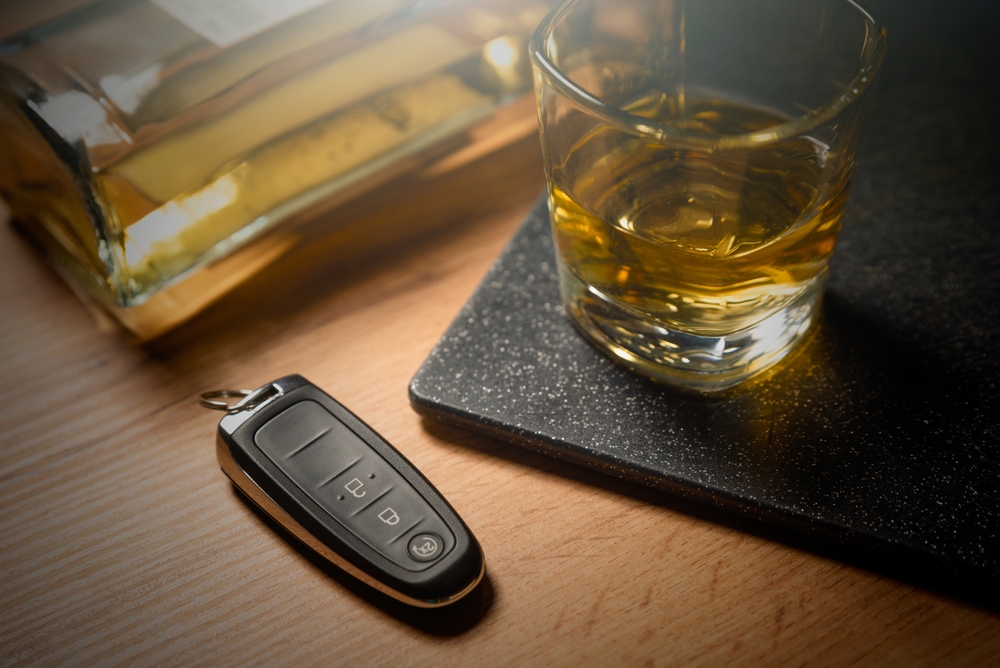
Not every DUI case proceeds to trial, and not every conviction results in maximum penalties. Liberty Law Group pursues every available avenue to reduce charges, avoid jail time, or minimize the long-term impact of a DUI arrest on your life and livelihood.
Pretrial Diversion Opportunities
First-offense DUI defendants without aggravating factors sometimes qualify for pretrial diversion programs that allow them to avoid conviction through completion of alcohol education, community service, and probation.
Not all cases qualify for pretrial diversion. Defendants with prior criminal records, elevated BAC levels, accidents, injuries, or aggravating circumstances typically face standard prosecution without diversion opportunities.
Negotiating Charge Reductions
Plea negotiations might result in reduced charges in cases with evidentiary weaknesses. Prosecutors sometimes agree to reduce DUI charges to reckless driving when evidence problems create trial risks, such as questionable stop justification, unreliable testing, and credibility issues.
Not every case merits a reduction offer, but prosecutors evaluate their evidence realistically and negotiate when circumstances warrant.
Taking Your Case to Trial
Trial could be the appropriate option when evidence fails to support the charge or when constitutional violations occurred. Prosecutors must prove guilt beyond a reasonable doubt, and that burden requires credible, reliable, admissible evidence.
When the State’s evidence contains gaps, contradictions, or legal deficiencies, taking the case to trial can protect your constitutional rights and force the government to meet its burden of proof.
Effective Sentencing Advocacy
Sentencing advocacy matters even after conviction. Defense attorneys present mitigation evidence, such as employment history, family responsibilities, community ties, and a lack of prior record, to persuade judges to impose minimum sentences, authorize work release, or recommend house arrest rather than traditional jail incarceration.
Judges possess discretion within statutory sentencing ranges, and effective advocacy influences those decisions.
FAQ for Lincoln DUI Defense Attorneys
Do I Need a DUI Defense Attorney for My First DUI in Lincoln, NE?
First-offense DUI charges in Nebraska carry mandatory minimum jail time, substantial fines, license revocation, and ignition interlock requirements that affect employment, family responsibilities, and daily life. Many people facing these charges have urgent questions for a criminal defense attorney about potential penalties and defense options. An attorney scrutinizes stop validity, testing procedures, and evidence to identify strategies that might result in charge dismissal, reduction, or favorable plea agreements.
Can a Lincoln DUI Lawyer Help Me Avoid Jail Time?
Results cannot be guaranteed in any case. However, attorneys may identify constitutional violations, testing errors, and procedural defects that might result in case dismissal or charge reduction. Each case depends on specific facts and available defenses.
Will I Lose My License After a DUI in Lincoln?
License revocation occurs through both the criminal conviction and the separate DMV administrative process. The DMV revocation happens first, often before the criminal case concludes, unless you request an ALR hearing within 15 days and prevail at that hearing. Criminal convictions result in additional license revocation periods.
What Should I Do Immediately After a DUI Arrest in Lincoln, Nebraska?
Invoke your right to remain silent, request an attorney, decline searches, and request a license hearing within 15 days. Document stop details, testing conditions, and officer statements while memories remain fresh. Contact an attorney immediately to begin building your defense.
How Much Does a DUI Lawyer Cost in Lincoln, NE?
Legal fees vary based on case complexity, whether the matter proceeds to trial, and the specific charges involved. Liberty Law Group offers free consultations and works with clients on flexible payment arrangements to make quality representation accessible during financially stressful circumstances.
What Happens If I Refuse a Breath Test in Lincoln?
Refusing chemical testing triggers an automatic one-year license revocation under Nebraska’s implied consent law, separate from any criminal penalties.
How Long Does a DUI Stay on My Record in Nebraska?
DUI convictions remain on your criminal record permanently in Nebraska unless successfully set aside through a pardon or set-aside proceeding. For the purpose of enhanced penalties, Nebraska counts prior DUI convictions within the preceding 15 years when determining whether a new charge constitutes a second or third offense.
Can a Nebraska DUI Affect My Professional License or Employment?
A DUI conviction, especially for repeat offenses or for individuals in professions that require driving or a high level of public trust (like commercial drivers, nurses, or teachers), jeopardizes professional licensing and employment.
Employers often review criminal records, and certain professional licensing boards investigate any criminal conviction.
Consult your experienced defense attorney to understand potential impacts on your career.
What is the Difference Between an Occupational Permit and an Ignition Interlock Permit in Nebraska?
Both permits allow drivers to maintain limited driving privileges during a license revocation period, but they have different requirements.
- An Occupational Permit restricts driving to necessary activities like work, medical appointments, and school, and does not require a special device.
- An Ignition Interlock Permit also restricts driving but requires the driver to install and use an ignition interlock device (IID) on their vehicle. Most DUI convictions require the IID as a condition of regaining any driving privileges.
Protect Your Rights With Experienced Lincoln DUI Defense

A DUI arrest requires fast, strategic legal action. Liberty Law Group defends DUI charges in Lancaster County courts and fights administrative license actions before the Department of Motor Vehicles, scrutinizing the State’s case to identify constitutional violations, procedural errors, and evidentiary weaknesses.
The 15-day deadline for requesting your license hearing approaches quickly, and failing to act forfeits your opportunity to challenge the suspension. Contact Liberty Law Group immediately at (531) 249-5534 to schedule a confidential consultation.
Liberty Law Group – Lincoln Office
1201 O St #101,
Lincoln, NE 68508
P: (402) 645-0031