




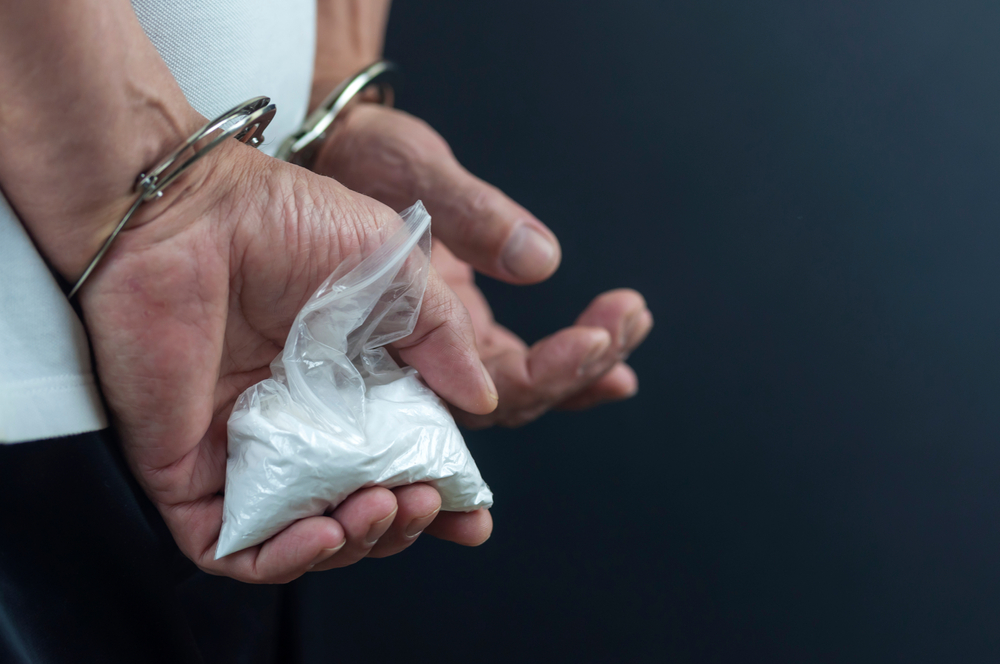
The same bag of drugs can send you to two completely different courthouses. One is the Douglas County District Court, where a Nebraska judge has room to consider probation, drug court, and parole. The other is the federal courthouse in Omaha, where mandatory minimums lock in years that no judge can lower, and parole does not exist. Which one you land in often matters more than the drug itself.
That fork is the first thing a serious Omaha drug charges lawyer looks at, because almost everything downstream depends on it. Liberty Law Group defends the full range of drug cases in Omaha and Douglas County, from a single possession charge to a multi-defendant federal conspiracy, in both state and federal court.
Charged with a drug crime in Omaha? Call (402) 865-0501. The first question is which system you are in and what can still be changed.
Table of Contents
- What Counts As A Drug Charge In Nebraska?
- What Are The Penalties Under Nebraska Law?
- State Or Federal? The Question That Changes Everything
- Why A Federal Drug Case Is A Different Animal
- How Federal Drug Cases Get Built
- How The Douglas County Drug Court Process Works
- How Drug Charges Are Defended
- What Should You Do If Agents Come Knocking?
- What A Drug Conviction Costs Beyond Prison
- Frequently Asked Questions
- Why Liberty Law Group
What Counts As A Drug Charge In Nebraska?
“Drug charge” covers a wide range of conduct, and the label on the paperwork drives everything that follows. Most Omaha cases fall into a handful of categories.
Possession is the most common. It means having a controlled substance for personal use, whether it is in your pocket or in a space that the State says you control.
Possession with intent to deliver is the pivot point. The same drugs, paired with scales, baggies, cash, or a quantity the State calls too large for personal use, become a distribution case carrying far heavier penalties.
Distribution, delivery, and manufacturing cover selling, transferring, or producing drugs. Delivery does not require money to change hands, and manufacturing reaches everything from growing marijuana to running a meth operation.
Trafficking is really a quantity story. Larger weights trigger steeper charges and, in the federal system, automatic minimum sentences tied directly to how much was involved.
Then come the charges that ride along: drug paraphernalia, maintaining a drug-involved property, prescription fraud, and conspiracy, which can attach to people who never touched the drugs at all.
The category of the charge is the whole ballgame, and it is often negotiable. Call (402) 865-0501 before it hardens.
What Are The Penalties Under Nebraska Law?

Nebraska runs drug penalties through Neb. Rev. Stat. § 28-416, with the controlled substances themselves sorted into five schedules under § 28-405. Where your case lands depends on the drug, the amount, and what the State says you intended.
Simple possession of almost any controlled substance other than marijuana is a Class IV felony, punishable by up to two years in prison, up to 12 months of post-release supervision, and a fine up to $10,000. Marijuana is lighter, starting as an infraction for an ounce or less and climbing to a felony past a pound.
Selling or possessing with intent to deliver is where the numbers jump. Distributing a Schedule I, II, or III drug is a Class IIA felony, and an exceptionally hazardous one is a Class II felony carrying one to fifty years. Larger quantities of drugs like methamphetamine, cocaine, and heroin push the charge higher still, up to a Class IB felony with a mandatory minimum of twenty years.
One feature of the state system matters enormously: Nebraska still has parole and probation. A state sentence can often be served on supervision, shortened for good behavior, or avoided through a program. That flexibility is exactly what disappears when a case goes federal.
Two years of exposure or twenty can turn on how a single charge is framed. Call (402) 865-0501 to understand yours.
State Or Federal? The Question That Changes Everything
Most Omaha drug cases stay in state court. The ones that go federal change character completely, and a handful of factors decide which way a case breaks.
Quantity is the biggest. Once the weight climbs into kilos of cocaine, pounds of methamphetamine, or significant amounts of fentanyl or heroin, federal prosecutors take interest.
Geography is the second. Omaha sits on Interstate 80, a primary drug corridor, and anything that moves across state lines is interstate commerce, which is federal territory by definition.
Who investigated is the third. When the DEA, the FBI, or a joint task force builds the case, often over months of wiretaps, informants, and controlled buys, they tend to take it to the U.S. Attorney’s Office for the District of Nebraska rather than hand it to the county.
Guns and organizations push cases federally, too. A firearm tied to drug activity, or an alleged network of sellers, invites federal conspiracy charges that can sweep in everyone connected.
The practical result is two different prosecutors and two different rulebooks. The Douglas County Attorney handles state cases under Nebraska law. The U.S. Attorney handles federal cases under a code built to be harsher.
If federal agents have already contacted you, do not wait for an indictment. Call (402) 865-0501 now.
Why A Federal Drug Case Is A Different Animal

Federal drug law is built around mandatory minimum sentences tied to drug weight, and they are unforgiving. Under 21 U.S.C. § 841, 500 grams of cocaine, 100 grams of heroin, 40 grams of fentanyl, or 50 grams of a meth mixture each trigger a five-year minimum. Ten times those weights and the floor hits ten years. If the drugs are linked to a death, the minimum jumps to twenty.
The word “minimum” is literal. A federal judge cannot go below it, no matter how sympathetic the person or the story. And there is no parole in the federal system, so a sentence is served almost in full, followed by years of supervised release.
Two more federal features blindside people. The first is relevant conduct: at sentencing, the court can count drug quantities beyond what you were charged with, as long as they were part of the same operation.
You can be indicted over one kilogram and sentenced as if it were ten. The second is conspiracy under 21 U.S.C. § 846. An agreement plus a single act can make you responsible for the whole conspiracy’s drug weight, even if you never handled most of it.
On top of all that sits the United States Sentencing Guidelines, which set a recommended range from drug type, quantity, role, and prior record. A career offender label, triggered by two qualifying priors, can push a mid-level case into decades.
Federal exposure is calculated, not guessed. The earlier a lawyer maps it, the more there is to do about it. Call (402) 865-0501.
How Federal Drug Cases Get Built
Federal drug cases rarely start with a single arrest. They are assembled, often over months or years, before anyone is charged.
Agents from the DEA and FBI, frequently working through joint task forces, rely on wiretaps, confidential informants, controlled buys with marked money, surveillance, and financial tracing. By the time an indictment lands, the government has usually built a thick file and lined up cooperators who are already talking.
That long runway cuts both ways. The evidence can be substantial, but it also means there are months of investigative steps to examine. Wiretap authorizations, informant reliability, the scope of searches, and the accuracy of recorded buys are all places where a federal case can be pressured.
It also means the smartest time to involve a lawyer is before charges, not after. People who learn they are a target, or who get a call from an agent, still have room to act while the case is forming.
How The Douglas County Drug Court Process Works

On the state side, Omaha offers something the federal system does not: a path that can end with the charges dismissed and sealed. The Douglas County Adult Drug Court, the first drug court in Nebraska when it opened in 1997, exists for non-violent felony cases driven by genuine addiction. The process is specific, and it runs on a clock.
Step one is early contact. Defense counsel reaches out to the designated deputy county attorney who screens drug court candidates, ideally within weeks of the arrest. Step two is review. The County Attorney’s office weighs the charge and criminal history, then refers suitable cases to the drug court office for screening.
Step three is the assessment. A candidate has to score as high-risk and high-need and carry a substance use evaluation showing at least a moderate or severe disorder. Not everyone who uses drugs qualifies, because the program is built for serious dependence.
Step four is the plea, and this is the catch. Drug Court is post-plea, so a candidate pleads guilty before a district judge and admits the dependence, with a sentencing date set in the background. Finish the program, through its phases of treatment, testing, and frequent court appearances, and the admitting charges are dismissed and sealed at graduation. Wash out, and the plea is already entered.
Drug Court can be the right move or the wrong one. Knowing which takes a hard look before any plea. Call (402) 865-0501.
How Drug Charges Are Defended
Whether a case is state or federal, the defense starts in the same place: how the government got its evidence, and whether it can prove the case it charged.
The stop and the search come first. A traffic stop stretched past its purpose, a search with no warrant and no valid consent, or a canine alert that does not hold up can get evidence suppressed. In a drug case, suppressed evidence often ends the prosecution.
Possession and knowledge come next. When drugs turn up in a shared car or home, the government still has to prove you knew about them and controlled them. Proximity is not possession, and that gap is where many cases are won.
In bigger cases, the fight moves to weight and intent. Pushing the proven quantity below a threshold can drop a federal mandatory minimum entirely or move a state charge down a class. Challenging the leap from possession to intent to deliver can turn a distribution case back into a personal-use one. Lab analysis, the purity-versus-mixture question, and the chain of custody all matter here.
There is also the charging decision itself. Whether a case is filed in state or federal court is not always fixed, and in some situations, the defense can influence it, or at least prepare for the harsher forum. Keeping a case in state court, where parole and drug court exist, can be worth more than any single motion.
Every drug case has pressure points. The job is finding yours early. Call (402) 865-0501 to have the case reviewed.
What Should You Do If Agents Come Knocking?
How you handle the first contact can shape the whole case in either system.
Do not consent to a search of your car, phone, or home. Make the government rely on a warrant and on what it can justify. Do not try to explain your way out of it, because agents are trained to gather statements, and yours will be used to fill gaps in their case.
If federal agents approach you or you receive a target letter, treat it seriously and do not go in for an interview alone. A proffer session without preparation can lock in admissions that drive your sentence later. Politely decline, then call a lawyer.
Silence is not guilt, and it is often your strongest protection. Call (402) 865-0501 before you talk to anyone.
What A Drug Conviction Costs Beyond Prison
Prison is not the only price of a drug case, and some of the rest comes before any conviction.
Asset forfeiture is one people underestimate. Both Nebraska and the federal government can move to seize cash, cars, and even homes they claim are tied to drug activity, sometimes through a separate proceeding that runs alongside the criminal case. Getting that property back is its own fight.
A conviction then reaches into the rest of life. It can cost firearm rights, professional and occupational licenses, and jobs that screen for drug felonies. It can end federal student aid, surface on housing applications, and carry severe immigration consequences, including removal, for anyone who is not a citizen.
These consequences are the strongest argument for fighting a drug charge early rather than taking the quickest plea. The sentence ends. The record, and what it blocks, can last for decades.
Frequently Asked Questions
Is a drug charge in Omaha handled in state or federal court?
Usually state court, before the Douglas County District Court. A case can go federal when the quantity is large, the drugs crossed state lines, a federal agency like the DEA investigated, or a firearm or conspiracy is alleged. The two systems carry very different penalties, so which one you are in matters enormously.
Does Nebraska have a drug court in Omaha?
Yes. The Douglas County Adult Drug Court, the first in Nebraska, serves non-violent felony cases driven by addiction. It is a post-plea program of treatment, testing, and supervision, and graduates have their charges dismissed and sealed. Eligibility requires a high-need assessment and a guilty plea, so it does not fit every case.
Can I go to prison for simple possession in Nebraska?
Yes. Possessing most controlled substances other than marijuana is a Class IV felony, punishable by up to two years in prison plus post-release supervision. Many first-time cases resolve without prison through diversion, probation, or drug court, but the felony exposure is real, which is why early defense matters.
The drugs were found in a car I was riding in. Am I guilty?
Not automatically. The government must prove you knew about the drugs and had control over them, not just that you were nearby. In shared cars and homes, that proof is often thin. Constructive possession is one of the most contested issues in drug cases, in both state and federal courts.
Can the government take my car or money in a drug case?
Yes. Under both Nebraska and federal forfeiture law, prosecutors can try to seize cash, vehicles, and property they allege are connected to drug activity, sometimes in a civil case separate from the criminal charge. You can contest a forfeiture, but it carries its own deadlines, so act quickly.
Federal agents want to talk to me. Should I?
No, not without a lawyer. By the time agents make contact, they have usually been building the case for months, and your statements become evidence. You can decline politely and ask for counsel. Talking rarely helps and often hands the government the piece it was missing. Call (402) 865-0501 first.

Why Liberty Law Group
We defend drug cases across Omaha and Douglas County, in both Nebraska state court and the federal District of Nebraska. That dual footing matters, because the threat of a case going federal shapes how a state case should be handled from the very start.
We treat a drug charge as a problem with moving parts, not a foregone conclusion. Sometimes the work is suppressing a search. Sometimes it is positioning a client for Drug Court and a dismissal. In a federal case, it is often driving the quantity and the role down before sentencing. We are licensed in Nebraska and Iowa and appear in both state and federal court.
Talk to an Omaha drug crime defense lawyer today. Call (402) 865-0501. The consultation is free and confidential.