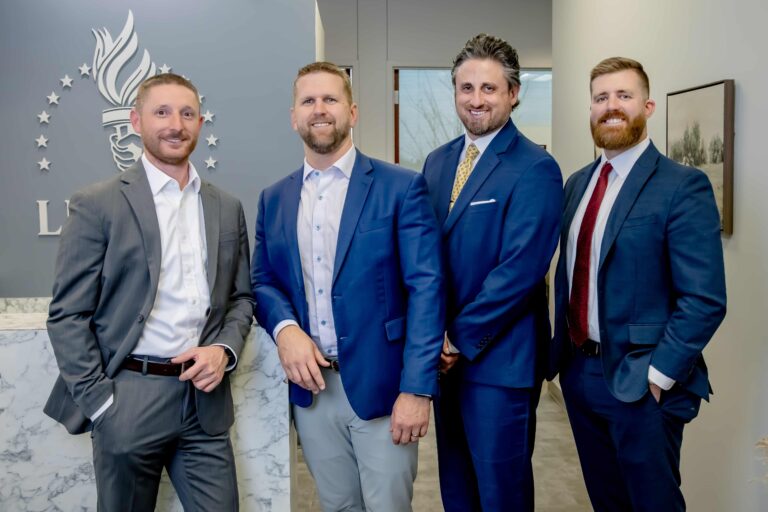





A criminal defense lawyer at Liberty Law Group defends people charged with felonies, misdemeanors, and federal offenses across Omaha, Douglas County and Gage County. From the first hours after an arrest, we protect your constitutional rights, investigate how the state built its case, and challenge the evidence against you. Nebraska commits significant resources to securing a conviction, so the counsel you retain early shapes everything that follows.
Our legal team stands between you and the consequences of a criminal conviction. We investigate every detail of your arrest, identify law enforcement errors, and litigate to protect your rights at every stage.
If you face state or federal charges, contact an Omaha criminal defense lawyer at Liberty Law Group today. Call (402) 865-0501 for an immediate review of your case.
Table of Contents
- Direct Immediate Intervention Post-Arrest
- The Douglas County Criminal Case Timeline
- Strategic Defense Against Omaha DUI Charges
- Highway Drug Interdiction and Interstate 80 Stops
- Narcotics Defense: State and Federal Configurations
- Homicide and Violent Crime Defense Advocacy
- Defense Tactics for Sexual Assault Accusations
- Domestic Violence and Order of Protection Litigation
- White-Collar Defense and Complex Financial Prosecutions
- Federal Criminal Defense in the District of Nebraska
- Special Practice Sectors: Title IX, Licensing, and Specific Violations
- Targeted Defense and Property Crimes
- Evidentiary Suppression Frameworks
- Post-Conviction Remedies, Appeals, and Record Clearing
- FAQ for Omaha Criminal Defense Lawyer
- Retain Strategic Defense Representation Today
Direct Immediate Intervention Post-Arrest

The decisions you make during the first twenty-four hours after an arrest dictate the trajectory of your entire case. Prosecutors utilize this window to build their initial narrative before you even secure legal representation.
Law enforcement officers frequently exploit a suspect’s confusion during initial interrogations. Securing counsel immediately halts all police questioning and prevents you from making self-incriminating statements.
Surveillance footage, cellular data, and physical evidence can disappear within days of an incident. Our defense investigators move quickly to preserve the evidence necessary to build a comprehensive defense strategy.
The primary reason to retain counsel immediately is to disrupt the prosecution’s momentum. Early defense intervention allows our legal team to challenge the state’s initial assumptions before formal charges solidify.
The Douglas County Criminal Case Timeline
The progression of a criminal case through the Nebraska judicial framework follows an unyielding sequence of hearings. Missing a procedural deadline or mismanaging a preliminary appearance can permanently compromise your trial options.
- Step 1 involves booking and detention analysis inside the jail facility. Correctional officers process you into the Douglas County Jail, cataloging your property and conducting initial classification interviews. Our legal team immediately reviews the public booking log to verify the stated statutory basis for your detention.
- Step 2 brings the county court arraignment session. You appear before a Douglas County Court judge to receive formal notice of the state’s charges. The court reads your constitutional rights, addresses initial bail amounts, and establishes conditions for your pretrial release.
- Step 3 requires the preliminary hearing assessment for felony charges. The prosecution must present baseline evidence to establish probable cause that a felony occurred and that you committed it. We utilize this appearance to cross-examine state witnesses, exposing contradictions under oath before the case moves to District Court.
- Step 4 initiates the District Court arraignment and discovery stage. Once bound over to the Fourth Judicial District Court, the state provides its initial discovery file, including police reports, audio files, and lab results. We enter a formal plea of not guilty and initiate an exhaustive, independent evidence audit.
- Step 5 focuses on pretrial motion practice and constitutional litigation. Our trial attorneys file precise motions to suppress evidence or dismiss charges based on constitutional infractions. We litigate these matters in open court, forcing the state to defend the lawfulness of its investigative techniques.
- Step 6 represents the final adjudication through case resolution or a jury trial. If the state refuses to dismiss unsupported charges, the case proceeds to a jury trial. Twelve citizens from the local community hear the evidence, and the prosecution must satisfy the burden of proof beyond a reasonable doubt.
Strategic Defense Against Omaha DUI Charges
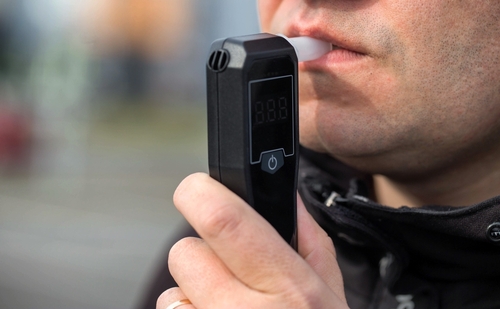
Nebraska Revised Statute section 60-6,196 imposes severe, mandatory penalties for operating a motor vehicle under the influence of alcohol or drugs. A conviction disrupts your employment, permanently marks your criminal record, and triggers mandatory incarceration periods.
The state establishes a legal limit of 0.08% blood alcohol concentration for most adult drivers. Specifically, commercial drivers face a stricter limit of 0.04%, while drivers under the age of 21 face a zero-tolerance standard of 0.02%.
Nebraska operates under implied consent laws, meaning you agree to chemical testing by operating a vehicle on state roadways. Refusing a chemical test triggers an automatic administrative license revocation and carries independent criminal penalties.
Law enforcement officers rely on three standardized tests: the Horizontal Gaze Nystagmus, the Walk and Turn, and the One-Leg Stand. Specifically, officers frequently fail to follow the strict administration guidelines established by the National Highway Traffic Safety Administration.
Environmental factors like uneven pavement, wind conditions, passing traffic, and physical injuries invalidate these subjective scoring systems. In contrast to police claims, these tests reflect coordination errors rather than chemical impairment.
The state of Nebraska utilizes specific evidential breath testing instruments to measure blood alcohol concentration. These machines depend on precise chemical and infrared technology that requires continuous calibration and maintenance.
We audit the maintenance history, solution change logs, and internal error codes of the specific device used in your case to invalidate its readouts. Furthermore, an officer’s failure to conduct a continuous fifteen-minute observation period before the test invalidates the resulting score.
In cases involving drug-induced impaired driving or serious accidents, prosecutors seek a blood draw warrant. The collection, preservation, and analysis of whole blood samples must adhere to Title 177 of the Nebraska Administrative Code.
An uncertified phlebotomist, fermentation within the sample vial, or an incomplete chain of custody document can render the sample legally inadmissible. We routinely challenge the scientific foundations of the state’s laboratory blood analysis.
Separate from the criminal court process, the Nebraska Department of Motor Vehicles moves to revoke your driving privileges immediately. You have exactly ten days from the date of your arrest to file a formal request for an administrative hearing.
Failure to petition for this hearing results in an automatic, long-term loss of your license before your first criminal court date. Consequently, our firm files the necessary paperwork immediately to preserve your right to drive.
Highway Drug Interdiction and Interstate 80 Stops
The stretch of Interstate 80 running through Douglas County and surrounding regions is a primary enforcement zone for state and federal drug interdiction units. Specialized task forces routinely utilize minor traffic deviations to execute highly invasive roadside investigations.
Officers frequently claim a driver failed to signal for exactly two seconds or followed another vehicle too closely to justify an initial stop. Our defense strategy involves a microscopic analysis of the cruiser’s dashcam footage to verify whether any actual infraction occurred.
If the initial stop lacks reasonable suspicion, every piece of evidence discovered afterwards is subject to total suppression. Consequently, challenging the initial legality of the roadside encounter remains a top priority.

A routine traffic stop must conclude once the officer issues a warning or citation and checks your license and registration. Law enforcement cannot indefinitely detain you along the highway while awaiting the arrival of a drug-detection K-9 unit.
The United States Supreme Court has established that extending a stop without independent, articulable criminal suspicion violates the Fourth Amendment. Specifically, we cross-reference the officer’s radio logs with dashcam timelines to expose unlawful detentions.
Drug dogs are not infallible sensors; their alerts frequently stem from subtle, intentional physical cues from their handlers. We demand comprehensive training logs, field deployment histories, and false-positive statistics for the specific K-9 team involved.
If the dog lacks verifiable reliability, the subsequent warrantless search of your vehicle lacks the legal foundation of probable cause. In contrast to prosecution claims, many alerts are entirely unsupportable.
During interstate drug stops, officers regularly seize large sums of cash even if they find no narcotics or file no formal charges. The state attempts to permanently confiscate your property under civil asset forfeiture laws.
The government assumes the cash connects to illicit drug transactions. We fight these civil actions independently, forcing the government to meet its statutory burden of proof or return your assets.
Narcotics Defense: State and Federal Configurations
Drug offenses in Nebraska range from basic possession to high-volume interstate trafficking distribution networks. The specific jurisdiction handling your case alters the applicable defense strategy and sentencing landscape.
Simple possession of controlled substances like methamphetamine, cocaine, or unauthorized prescription narcotics carries felony classifications in Nebraska. The state must prove you had conscious knowledge of the substance’s presence and its illegal nature.
Prosecutors elevate standard possession charges to intent to distribute based on the weight of the seized substance or circumstantial evidence. Specifically, the presence of plastic baggies, digital scales, and large amounts of cash can trigger enhanced felony penalties.
Operating a grow house or processing facility invites intense prosecution scrutiny and severe mandatory sentencing ranges. Our defense strategy involves breaking down the nexus between the accused individual and the physical location where the manufacturing occurred.
Prosecutors frequently charge individuals with possession simply because narcotics were discovered inside a shared vehicle or home. Specifically, the state must prove you had actual knowledge of the drug’s presence and exercised direct physical dominion over it.

Our firm systematically attacks the loose circumstantial inferences used by prosecutors to link you to items belonging to third parties. In contrast to the state’s narrative, proximity does not equal legal possession.
When drug enforcement teams raid an Omaha residence, they do so based on a search warrant signed by a magistrate. We dissect the underlying affidavit to determine if the police relied on unverified, anonymous informants or stale observations.
If the affidavit contains reckless falsehoods or lacks probable cause, we request a Franks hearing, a pretrial proceeding that lets us challenge the truthfulness of the officer’s warrant application, to invalidate the warrant. Consequently, all evidence seized during the execution of the flawed warrant faces exclusion from trial.
Many high-volume drug arrests occur after an informant coordinates a controlled purchase under police surveillance. In contrast to the clean narrative presented in police reports, these operations are frequently plagued by structural flaws.
Missing audio recordings, unmonitored gaps, and self-serving actions by the informant compromise the state’s case. We expose these vulnerabilities to cast reasonable doubt on the state’s account of the transaction.
Homicide and Violent Crime Defense Advocacy
When the state files charges of murder, manslaughter, or first-degree assault, you face the prospect of life in prison or capital punishment. Defending these charges demands a firm with the resources to manage thousands of discovery documents and cross-examine state forensic specialists.
The Omaha Police Department Forensic Investigation Unit collects physical evidence to validate the state’s preconceived theory of the crime. We counter this bias by deploying independent ballistics specialists, bloodstain pattern analysts, and forensic pathologists.
Our specialists re-examine the physical evidence to uncover details that support your innocence or contradict the state’s timeline. Specifically, independent forensic review exposes the limitations of the government’s scientific claims.
Nebraska law recognizes your right to protect your life or the lives of others through the deployment of proportional force. If you acted out of a justifiable fear of death or severe bodily injury, we can build a comprehensive affirmative defense.
This involves preserving eyewitness accounts, analyzing medical reports, and demonstrating that the alleged victim was the primary aggressor. Consequently, we force the state to attempt to disprove your self-defense claim beyond a reasonable doubt.
In serious violent crime prosecutions, the state frequently relies on cell phone tower pings, mobile device location logs, and automated license plate readers. We employ digital forensic specialists to review the raw data streams collected by service providers.
We can establish reliable alibis or prove that the prosecution’s spatial tracking theories are scientifically unsupportable. Furthermore, we expose how wireless network limitations cause inaccurate location reporting.
Human memory degrades rapidly under stress, making eyewitness identification highly unreliable. Police lineups must comply with strict statutory protocols designed to prevent officer suggestion and confirmation bias.
We challenge flawed identification procedures in court, seeking to exclude highly prejudicial and inaccurate classroom identifications from the trial record. In contrast to early police assertions, misidentification remains a primary driver of wrongful convictions.
Defense Tactics for Sexual Assault Accusations
Allegations of sexual assault or sex trafficking carry immediate social isolation and severe statutory penalties, including lifetime tracking under the Nebraska Sex Offender Registration Act. Developing a viable defense requires an analytical review of all communications and medical data.
A significant portion of modern sexual assault investigations turns on conflicting statements regarding consent. We utilize advanced digital extraction tools to recover deleted text messages, social media exchanges, and geolocation tags from the hours surrounding the alleged incident.
These communications provide objective evidence regarding the true nature and context of the interaction. Specifically, they reveal the prior relationship and baseline intentions of the involved parties.
The state routinely introduces findings from a Sexual Assault Nurse Examiner to imply criminal conduct. In contrast, forensic medical findings are frequently inconclusive or consistent with consensual contact.
Our attorneys work closely with independent medical consultants to isolate flaws in the examination process, sample storage failures, and alternative explanations for physical marks. Consequently, we prevent the state from mischaracterizing standard medical observations.
A conviction for a qualifying sex offense subjects an individual to mandatory registration for a duration of fifteen years, twenty-five years, or life. This administrative status restricts where you can reside, where you can work, and your ability to travel.
Our main objective during pre-trial litigation is to alter the trajectory of the case so that registration options are entirely removed from consideration. Furthermore, we fight to prevent temporary orders from disrupting your immediate life.
When a complaining witness brings forth allegations months or years after an alleged event, physical evidence is non-existent. The defense must rely on exposing timeline discrepancies, shifting narratives in police interviews, and hidden motives for fabrication.
We systematically cross-reference every statement given to family members, counselors, and detectives to highlight critical contradictions. In contrast to fresh complaints, delayed allegations require deep skepticism.
Domestic Violence and Order of Protection Litigation
Domestic assault charges move through the Douglas County court system under heightened scrutiny from specialized prosecution units. An allegation can result in an immediate eviction, loss of parental access, and the immediate seizure of your firearms.
Nebraska Revised Statute section 28-323 categorizes domestic assault based on prior history and the nature of the alleged physical contact. An allegation involving impediment of normal breathing raises the charge to a Class IIIA felony, carrying a mandatory state prison sentence.
We review the medical evidence and emergency response audio to challenge whether the state has the facts required to support an enhancement. Specifically, we investigate whether physical symptoms match the statutory definitions of strangulation.
Accusations of domestic misconduct frequently surface during contentious divorce or child custody proceedings in District Court. Complainants sometimes leverage the criminal justice system to secure exclusive possession of a home or establish temporary custody orders.
Our legal team exposes these strategic motivations through cross-examination and the introduction of prior civil court transcripts. In contrast to genuine emergencies, tactical allegations crumble under rigorous cross-examination.
When an individual secures an ex parte domestic abuse or harassment protection order, you are legally barred from contacting them or entering specific properties. Violating this order is an independent arrestable offense that carries distinct criminal penalties.
We represent clients at formal show-cause hearings to challenge the factual basis of the order and prevent a permanent injunction from entering your public record. Consequently, we protect your long-term reputation and your immediate housing stability.
Under the federal Lautenberg Amendment, a conviction for a misdemeanor crime of domestic violence strips you of your right to ship, transport, possess, or receive firearms for life. This consequence applies regardless of whether Nebraska state law eventually restores your rights.
We structure our defense to avoid any resolution that triggers a lifetime restriction on your Second Amendment rights. Specifically, we target alternative misdemeanor outcomes that protect your constitutional privileges.
White-Collar Defense and Complex Financial Prosecutions

Financial crimes involve extensive electronic paper trails, corporate structures, and multi-agency investigations. Securing a favorable outcome requires a firm capable of dissecting accounting records and establishing a lack of deceptive intent.
The state must prove beyond a reasonable doubt that an individual intentionally misappropriated funds entrusted to their care. In contrast, many financial discrepancies arise from poor bookkeeping practices, software processing errors, or ambiguous corporate authorization policies.
We collaborate with forensic accountants to track every transaction and isolate legitimate business actions from criminal misconduct. Consequently, we demonstrate the absence of a criminal mind behind the accounting errors.
Cyber offenses rely on tracking IP addresses, MAC addresses, and digital server access logs back to a specific physical location. However, demonstrating that a specific router or device was involved does not prove who was sitting at the computer when the transaction occurred.
We exploit this digital identification gap to prove that third parties or malware could have executed the disputed actions. Specifically, we break down the prosecution’s technical assumptions regarding device security.
When an individual faces allegations of financial misconduct, state regulatory agencies or insurance companies often initiate independent investigations alongside law enforcement. Statements made to civil investigators can be subpoenaed by prosecutors and used against you in a criminal trial.
We manage all communication across parallel proceedings to ensure your constitutional protections remain secure. Furthermore, we prevent the state from utilizing civil discoveries to bypass criminal discovery rules.
Federal Criminal Defense in the District of Nebraska
Defending an individual in federal court requires an understanding of procedures that differ substantially from state court rules. Federal agencies possess extensive resources and utilize rigid sentencing guidelines that carry severe mandatory minimum terms.
Federal criminal prosecutions are initiated via a grand jury indictment or a formal criminal complaint. Cases filed in the District of Nebraska are adjudicated at the federal courthouse in downtown Omaha.
Our trial lawyers are admitted to practice before the federal bar and understand the local rules that govern federal criminal discovery and motion timelines. Specifically, we manage the compressed litigation schedule characteristic of federal practice.
Federal sentencing relies on a complex mathematical matrix combining an offense level score with your prior criminal history category. Specifically, the guidelines calculate sentencing ranges based on factors such as total monetary loss or drug weight thresholds.
We aggressively contest the application of specific enhancement points during the sentencing phase to minimize your potential exposure to custody. In contrast to state sentencing, federal rules require precise, written objections to pre-sentence reports.
Under federal law, the government can convict you of conspiracy without proving you ever possessed a physical illicit item or met the principal organizers. The prosecution only needs to prove you knowingly joined an agreement to violate federal statutes.
We dismantle these loose network claims by demonstrating that your association with the accused individuals was entirely casual or incidental. Specifically, we isolate your actions from the broader criminal enterprise.
Special Practice Sectors: Title IX, Licensing, and Specific Violations
A criminal charge or administrative allegation can jeopardize your academic standing, your professional credentials, or your commercial privileges independent of any standard jail sentence.
Students at Creighton University, the University of Nebraska Omaha, or local community colleges face internal disciplinary hearings when accused of sexual misconduct. These administrative proceedings lack standard constitutional protections, yet their outcomes can ruin your future academic options.
We advise students throughout the investigation, prepare them for interviews, and safeguard them against self-incrimination. Consequently, we ensure campus procedures do not compromise ongoing or future criminal investigations.
For nurses, physicians, attorneys, and real estate professionals, an arrest for a DUI or drug crime triggers mandatory reporting requirements to state licensing boards. The Nebraska Department of Health and Human Services or specific professional oversight committees can suspend or revoke your license.
We represent you before these boards to protect your career and professional standing. In contrast to standard criminal defense, licensing defense requires managing distinct administrative codes.
Nebraska’s rural areas attract significant hunting activity, leading to strict enforcement of fish and game regulations by state and federal wardens. Violations of the Lacey Act involve allegations of illegally taking, possessing, or transporting wildlife across state lines.
We defend guides, landowners, and hunters against these specialized charges, protecting their property, equipment, and hunting privileges from forfeiture. Specifically, we challenge the state’s jurisdictional authority over specific wildlife management areas.
Charged with a felony or facing a federal indictment in Omaha? Call Liberty Law Group at (402) 865-0501 for an immediate case review.
Targeted Defense and Property Crimes
Property offenses carry significant social consequences and can escalate to high-level felonies based on value thresholds or the presence of a weapon.
Robbery requires proof that an individual utilized force or fear to take property directly from another person. If a weapon is present, prosecutors file additional charges under Nebraska’s use of a weapon to commit a felony statute.
We attack the reliability of physical descriptions, challenge the state’s weapon classifications, and expose inconsistencies in the complaining witness’s account. Consequently, we highlight the reasonable doubt surrounding the identification process.
A burglary charge requires proof that an individual entered a structure without authorization with the specific intent to commit a separate felony or theft inside. If you entered a building out of confusion, intoxication, or an honest belief that you had permission, the state lacks the fundamental element of intent.
We build our defense around the absence of entry intent to secure a dismissal or reduction of the charge. Specifically, we document your frame of mind prior to the entry.
Nebraska strictly regulates who can carry concealed weapons and prohibits specific individuals, such as convicted felons or active drug users, from possessing firearms. We analyze the lawfulness of the initial police contact that led to the discovery of the weapon.
If officers conducted an unconstitutional pat-down or vehicle search, we move to suppress the firearm, forcing the state to dismiss the case. Furthermore, we challenge whether the weapon meets the legal definition of functionality.
Evidentiary Suppression Frameworks
Our firm operates under the philosophy that a strong defense is rooted in aggressive pre-trial motion practice. We do not accept the state’s evidence file as valid; we examine it for constitutional flaws.
The Fourth Amendment protects you from unreasonable searches of your person, vehicle, and home. If law enforcement officers executed a search without a valid warrant or failed to satisfy a recognized exception to the warrant requirement, the evidence is tainted.
We file motions to suppress to ensure that unlawfully seized items are excluded from the prosecution’s trial file. Specifically, we force the state to prove the legality of its physical seizures.
If you are placed in custody, officers must read you your Miranda warnings before initiating any interrogation. If detectives extract statements without administering these warnings or ignore your clear request for an attorney, those admissions are inadmissible.
We litigate these issues at a Jackson v. Denno hearing, a pretrial hearing on whether your statement was voluntary, ensuring the statements cannot be presented to a jury. Consequently, we neutralize the state’s primary confession evidence.
The Sixth Amendment grants you the right to confront and cross-examine any witness who provides testimony against you. We challenge the introduction of out-of-court hearsay statements made by individuals who refuse to appear at trial.
We preserve your confrontation rights to prevent the state from building its case on unverified, third-party rumors. In contrast to casual investigations, trial rules demand the presence of physical witnesses.
Post-Conviction Remedies, Appeals, and Record Clearing
An unfavorable outcome at the trial level does not mean your legal options have concluded. The Nebraska appellate and post-conviction frameworks allow you to challenge errors made by judges, prosecutors, or prior defense counsel.
If a trial judge makes an erroneous evidentiary ruling or issues an unlawful sentence, you have a statutory right to appeal. We review the official trial transcript to isolate appealable legal errors.
We present comprehensive briefs to the Nebraska Court of Appeals and the Nebraska Supreme Court. Specifically, we argue for the reversal of conviction orders based on constitutional misapplications.
Nebraska Revised Statute section 29-2264 permits individuals who have completed probation or paid a fine to petition the court for a set-aside order. A set-aside order nullifies the conviction and restores your civil rights.
This permits you to state you have not been convicted of a crime on most employment applications. We manage the filing process and represent you at the required court hearings to clear your public profile.
For individuals with serious convictions who are ineligible for a standard set-aside, a formal pardon from the Nebraska Board of Pardons is the remaining option for relief. This process requires an exhaustive application highlighting your rehabilitation, community involvement, and professional goals.
We draft your petition and prepare you to present a compelling case directly to the Governor, Secretary of State, and Attorney General. Consequently, we help you pursue a clean separation from your record.
FAQ for Omaha Criminal Defense Lawyer
What should I do if an Omaha Police Department detective contacts me?
Do not engage in any conversation, provide a statement, or agree to a casual interview. Politely state that you are invoking your right to remain silent and want your attorney present, then immediately contact Liberty Law Group. Officers utilize these informal interactions to gather admissions before making an arrest or providing Miranda warnings.
What is the 10-day rule for an Omaha DUI arrest?
The ten-day rule refers to the strict window you have to file a formal petition with the Nebraska Department of Motor Vehicles to contest the Administrative License Revocation. If you fail to submit this petition or fail to enclose the required fee within ten days of your arrest, your driving privileges will be automatically revoked.
Can a passenger face felony charges during an Interstate 80 traffic stop?
Yes, under the doctrine of constructive possession, a passenger can be charged with a felony if narcotics are found within shared spaces of a vehicle. The state must demonstrate you had knowledge of the drugs and the capability to control them, which we challenge by proving the items belonged exclusively to someone else.
What constitutes a domestic assault enhancement in Nebraska?
A domestic assault charge escalates from a misdemeanor to a felony if you have prior domestic violence convictions within a specific timeframe or if the state alleges you impeded the victim’s breathing or circulation. These enhancements carry mandatory prison terms and require an immediate challenge to the medical evidence.
Can I clear a felony conviction from my record in Omaha?
You can clear specific felony convictions through the Nebraska set-aside process if you completed a sentence of probation. If you were sentenced to a term of incarceration in a state correctional facility, you must seek a formal pardon from the Nebraska Board of Pardons to restore your rights and clear your record.
What happens if I violate an ex parte protection order in Douglas County?
Violating an active protection order results in an immediate misdemeanor arrest, regardless of whether the complaining witness invited contact or initiated communication. A second or subsequent violation elevates the offense to a felony charge, making it critical to challenge the initial entry of the protection order at a show-cause hearing.
How does a federal criminal case differ from a Nebraska state case?
Federal cases are investigated by federal agencies like the Federal Bureau of Investigation or Drug Enforcement Administration and are prosecuted in the United States District Court under the United States Sentencing Guidelines. Federal prosecutions carry exceptionally high conviction rates and rigid mandatory minimum sentences, requiring a defense team admitted to practice before the federal bar.
Can the police search my smartphone without a warrant after an arrest?
No, the United States Supreme Court has established that law enforcement personnel must secure a search warrant based on probable cause to look through the digital contents of a cell phone. If officers access your device’s data without a warrant or your explicit consent, we file a motion to suppress that evidence.
What is a preliminary hearing, and why is it important?
A preliminary hearing is a procedural appearance required in felony cases where the prosecution must establish probable cause that you committed the alleged crime. We use this hearing to cross-examine state witnesses under oath, lock in their statements early, and identify flaws in the prosecution’s core theories.
What happens if I refuse to perform a field sobriety test in Omaha?
Refusing a standardized field sobriety test provides the officer with additional justification to request a preliminary breath test or chemical blood draw. While you have the right to refuse subjective physical tests, refusing an evidentiary breath or blood test carries severe administrative license penalties that match or exceed a standard DUI conviction.
Can my charges be dismissed if the police failed to read me my Miranda rights?
A failure to read Miranda warnings does not automatically result in a dismissal of your entire case. It does, however, mean that any statements or admissions you made while in custody cannot be used against you by the prosecution at trial. If the state’s remaining evidence is insufficient without those statements, the case may be dismissed.
What is the difference between simple possession and possession with intent to distribute?
Simple possession involves carrying an amount of a controlled substance consistent with personal use. Possession with intent to distribute is charged when the weight of the substance exceeds specific thresholds or when officers locate packaging materials, digital scales, and large amounts of cash, triggering more severe felony penalties.
How do I challenge a search warrant used to raid my home?
We challenge a search warrant by filing a motion to suppress and requesting a Franks hearing. We must demonstrate that the law enforcement officer intentionally or recklessly included material falsehoods in the affidavit, or omitted critical facts, and that without those falsehoods, the warrant would lack probable cause.
What is Title IX, and how does it affect a college student accused of an offense?
Title IX is a federal law that requires educational institutions to investigate allegations of sexual harassment or assault involving students. These administrative proceedings use a lower standard of proof than criminal courts and can result in immediate suspension or expulsion, requiring independent legal guidance to protect the student’s academic future.
What should I do if I missed my criminal court date in Douglas County?
If you miss a scheduled court appearance, the judge will issue a bench warrant for your immediate arrest. You should contact Liberty Law Group immediately so we can file a motion to quash the warrant or coordinate your appearance before the judge to resolve the failure to appear without you being placed in custody.
Retain Strategic Defense Representation Today

Facing criminal prosecution in Omaha or across Douglas County requires an analytical, aggressive response to the state’s evidence file. The prosecutors handling your case are actively advancing their narrative, and any delay in securing legal counsel gives the state a distinct strategic advantage.
Liberty Law Group provides the uncompromising, highly structured legal defense required to challenge serious state and federal criminal charges. We examine every police report, cross-examine state specialists, and litigate constitutional motions to protect your freedom and secure a favorable outcome.
Contact Liberty Law Group at (402) 865-0501 today to evaluate the details of your case and launch an aggressive criminal defense strategy.