




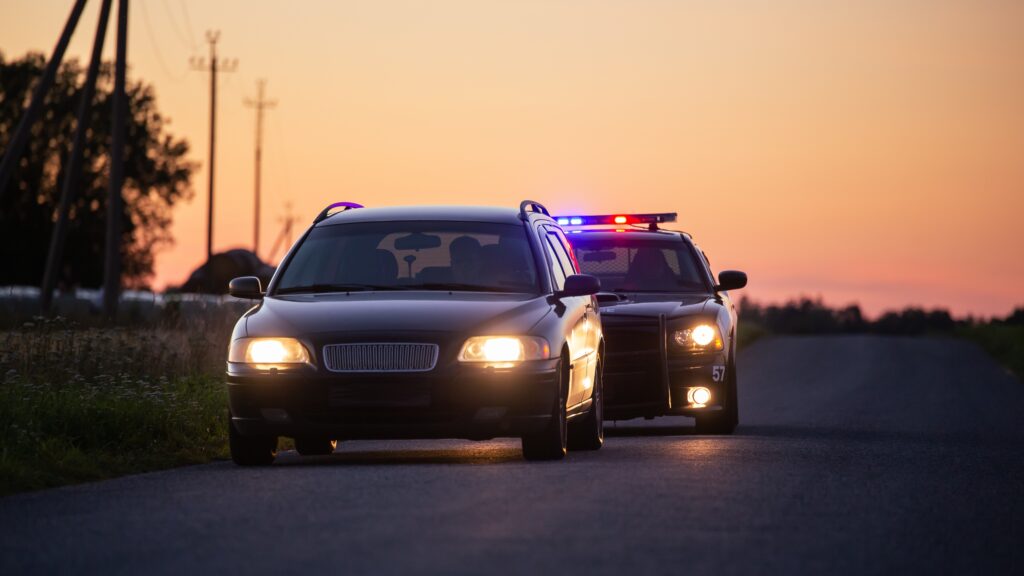
A felony drug trafficking charge in Nebraska often starts with a routine traffic stop hundreds of miles from home. The weight of what officers find, not the reason they pulled you over, usually decides how serious the case becomes. One extra ounce can move a charge across a felony class line that carries a mandatory prison term.
That is why the first decisions after an Interstate 80 (I-80) arrest matter, especially for out-of-state drivers facing a courthouse they have never seen. If you or a loved one was arrested on the I-80 or Interstate 76 (I-76) corridor, a Nebraska defense attorney can review the stop for free and explain your options.
What Happens After a Felony Drug Trafficking Stop on I-80 in Nebraska?
A trafficking-level find during an I-80 stop usually leads to felony charges in the county where the car was stopped. Larger cases, guns, or multi-state links can move the case to federal court.
The Legal Reality
These points summarize how trafficking-level cases from Nebraska interstate stops are charged.
- Nebraska grades most drug distribution offenses by drug type and weight, and certain quantities of cocaine, methamphetamine, heroin, and fentanyl carry mandatory minimum prison terms.
- A felony drug case is filed in the district court of the county where the stop happened, which can be any of the 15 Nebraska counties I-80 crosses.
- Federal prosecutors in the District of Nebraska can bring charges when quantities reach federal thresholds or the case involves firearms or multi-state activity.
- Being in a car where drugs are found does not, by itself, prove that a passenger possessed them.
Why Is I-80 a Drug Interdiction Corridor in Nebraska?
I-80 is one of the main east-west routes across the country, and in Nebraska it links Wyoming and Colorado traffic to Omaha and Iowa. Law enforcement treats the corridor as a transit route for large drug shipments, so stops on this stretch are often investigated with an eye toward trafficking rather than personal use.
Where the Corridor Runs: 15 Counties and the I-76 Connector
I-80 crosses 15 Nebraska counties from Kimball County in the west to Douglas County in the east. I-76 enters from Colorado in Deuel County and joins I-80 there. Because a felony case is heard where the stop happened, the county seat below is usually where your court dates will be.
| Corridor segment | Counties (county seat) |
|---|---|
| Panhandle | Kimball (Kimball), Cheyenne (Sidney), Deuel (Chappell), where I-76 also enters |
| West central | Keith (Ogallala), Lincoln (North Platte), Dawson (Lexington) |
| Central | Buffalo (Kearney), Hall (Grand Island), Hamilton (Aurora), York (York) |
| Eastern | Seward (Seward), Lancaster (Lincoln), Cass (Plattsmouth), Sarpy (Papillion), Douglas (Omaha) |
A driver arrested in Deuel County and a driver arrested in Sarpy County face the same statutes but very different logistics. Courthouse distance, local prosecutors, and the county’s diversion and bond practices all shape how a case feels day to day.
Why Out-of-State Drivers Feel the Impact First
Drivers passing through Nebraska tend to have no local ties, no local lawyer, and no easy way to return for hearings. Those facts can influence bond conditions and how quickly a person feels pressure to accept a plea offer, which is exactly when careful legal review helps most.
When Does a Drug Case Become Felony Trafficking in Nebraska?
Nebraska does not use a single crime called “trafficking.” Under section 28-416, it is a felony to manufacture, distribute, deliver, or possess with intent to distribute a controlled substance, and the weight of certain drugs raises the felony class.
For cocaine, crack cocaine, heroin, methamphetamine, amphetamine, and fentanyl, the statute sets three weight tiers. The penalty ranges come from Nebraska’s felony classes, and a mandatory minimum means probation is not available.
| Quantity (cocaine, crack, heroin, meth, amphetamine, or fentanyl) | Felony class | Penalty range |
|---|---|---|
| At least 10 grams but less than 28 grams | Class ID | 3-year mandatory minimum, up to 50 years |
| At least 28 grams but less than 140 grams | Class IC | 5-year mandatory minimum, up to 50 years |
| 140 grams or more | Class IB | 20 years to life |
Marijuana follows a different path. Possessing more than one pound is a Class IV felony, while possession with intent to distribute marijuana is generally charged as a Class IIA felony, which carries up to 20 years.
How Prosecutors Try to Prove Intent to Distribute
Intent is rarely admitted, so prosecutors build it from circumstances. The Nebraska Supreme Court has recognized that intent to distribute can be shown through several factors, including:
- The quantity of the drug compared with typical personal use
- Equipment and supplies found with it, such as scales or vacuum sealers
- Where the drug was found and how it was hidden
- How it was packaged, including multiple bundles of similar weight
- Testimony from officers trained in drug investigations
Each of these factors is open to challenge, and the strength of the intent evidence often decides whether a case stays at the trafficking level or drops to simple possession.
What Legal Limits Apply During an I-80 Stop?
Officers on I-80 still need a lawful reason to stop a car, a lawful reason to keep it there, and a lawful basis to search it. Two legal principles come up again and again in corridor cases.
The Nebraska Case That Limits Dog Sniffs

One of the most important search rulings in the country started on a Nebraska highway. In Rodriguez v. United States, the U.S. Supreme Court held in 2015 that officers may not extend a completed traffic stop to run a drug dog without reasonable suspicion.
The question is not whether the sniff happened before or after a warning was written, but whether it added time to the stop. Body camera and dash camera timestamps often decide that issue.
Passengers Are Not Automatically Guilty
Nebraska courts have held that a passenger’s mere presence in a vehicle with drugs is not enough to prove joint possession. Prosecutors typically need more, such as evidence tying the passenger to the drugs, suspicious behavior during the stop, or a long trip shared with the driver.
Common Felony Charges After an I-80 Drug Arrest
A single trafficking-level stop can produce several overlapping counts. The charges we see most often in Nebraska corridor cases include:
- Possession with intent to distribute or delivery of a controlled substance under section 28-416
- Weight-based charges for cocaine, meth, heroin, or fentanyl at the Class ID, IC, or IB level
- Criminal conspiracy, which Nebraska treats as the same class as the most serious crime that was the object of the agreement
- A firearm enhancement, which raises the charge one class higher when a person knowingly possessed a gun during the drug offense
Stacked counts raise the stakes in plea negotiations, which is why each count needs its own review rather than a single package deal.
Federal or State Court: Who Prosecutes I-80 Trafficking Cases?
Most I-80 drug cases are prosecuted by the county attorney in state court, but the U.S. Attorney’s Office for the District of Nebraska can take a case when federal interests are involved. Federal charges under 21 U.S.C. § 841 carry their own mandatory minimums based on drug weight.
Federal Weight Thresholds
The federal drug statutes set a five-year mandatory minimum for amounts such as:
- 500 grams or more of a cocaine mixture
- 50 grams or more of a methamphetamine mixture
- 40 grams or more of a fentanyl mixture
- 100 grams or more of a heroin mixture
A 10-year mandatory minimum applies at 10 times many of those amounts, such as 5 kilograms of cocaine, 500 grams of a meth mixture, or 400 grams of fentanyl. These thresholds explain why a single large find can change who prosecutes the case.
Where Federal Cases Are Heard
Federal cases from the corridor are heard in the U.S. District Court for the District of Nebraska, with courthouses in Omaha and Lincoln. Federal court moves on its own schedule, uses federal sentencing guidelines, and handles pretrial release differently from Nebraska county courts.
Arrested in a Nebraska County Where You Don’t Live?
Being charged far from home creates problems that have nothing to do with guilt or innocence. People in that position often find these steps helpful:
- Writing down the time, location, and order of events of the stop while memory is fresh
- Keeping every document from the arrest, including bond paperwork, property receipts, and the citation
- Avoiding phone calls about the case from jail, since jail calls are commonly recorded
- Asking family members to hold off on contacting the prosecutor or the officers directly
- Talking with a Nebraska defense lawyer before the first court date, not after
Taking these steps early gives your lawyer more to work with when reviewing the stop and negotiating release.
Bond When You Live Out of State
Judges setting bond consider ties to Nebraska and the risk that a person will not return. Showing stable employment, family responsibilities, and a realistic travel plan can make a meaningful difference for an out-of-state driver.
Court Dates Hundreds of Miles Away
A felony case moves from county court to district court, with a preliminary hearing, arraignment, and motion hearings along the way. A local lawyer can explain which appearances require you in person and plan the case around that schedule.
How Liberty Law Group Defends Corridor Cases
Liberty Law Group defends people charged after interstate stops in both Nebraska state courts and federal court. Our attorneys are licensed in Nebraska and Iowa, and our approach starts with the stop itself: the video, the timestamps, the dog, and the reasons officers gave for every step.
Results From Interstate and Federal Drug Cases

In a Lancaster County interstate stop, attorney Justin Kalemkiarian argued that our client did not knowingly follow another car too closely because that car had pulled in front of him. The court suppressed the evidence, the case was dismissed, and our client avoided forfeiture of more than $10,000.
In a Hamilton County interstate case involving nine charges and a three-year mandatory minimum, Justin challenged a prolonged detention and helped secure a 24-month deferred judgment. In federal court, attorney Seth Morris won a not guilty verdict for a passenger charged with possessing 500 grams or more of meth with intent to distribute.
Past results do not predict future outcomes, and every case depends on its own facts.
Felony Drug Trafficking Charges in Nebraska: Questions Answered by Our Attorneys
These questions come up often from people charged after an interstate stop.
Can police search my phone after a Nebraska drug arrest?
Police generally need a warrant to search the contents of a cell phone, even after an arrest, under the U.S. Supreme Court’s 2014 decision in Riley v. California. Officers may seize the phone and then apply for a warrant, so declining consent to a phone search is still worth stating clearly.
Is carrying a large amount of cash illegal in Nebraska?
Carrying cash is not a crime in Nebraska. It becomes a Class IV felony under section 28-416 when the money was used or intended to be used to facilitate a drug distribution offense, which prosecutors must prove.
Can my car be forfeited after an I-80 drug arrest?
A Nebraska court may order a vehicle forfeited as part of a drug sentence, but only after a conviction and a separate hearing where the state proves by clear and convincing evidence that the vehicle was used to facilitate the offense. Federal forfeiture follows different rules.
Can I be charged in both Nebraska and federal court for the same drugs?
Yes, state and federal governments are separate sovereigns, and the U.S. Supreme Court confirmed in Gamble v. United States (2019) that both may prosecute the same conduct. In practice, prosecutors usually coordinate, and one case often resolves the other.
Is a drug dog’s alert always enough for police to search a car?
A drug dog’s alert can supply probable cause, but its reliability can be challenged. In Florida v. Harris (2013), the U.S. Supreme Court said courts must weigh all the circumstances, which can include the dog’s training records and field performance.
Before the Next Court Date
An I-80 arrest can leave you far from home, unsure which county even has your case, and facing numbers that sound impossible to absorb. You do not have to sort through it alone. Liberty Law Group offers free consultations, and attorneys are available 24/7.
Call our Omaha office at (402) 865-0501 or our Lincoln office at (531) 249-5534 to talk through the stop, the charges, and what comes next. We represent clients in Nebraska and Iowa state courts and federal court across the corridor.