





If you are injured while working in Omaha, Lincoln, anywhere else in the state of Nebraska, or for a Nebraska-based employer, you likely have questions about your financial future and medical care. The Nebraska Workers’ Compensation Act was created to provide a “no-fault” system that offers medical and wage benefits to compensate workers for injuries resulting from work-related accidents or occupational diseases. While the “no-fault” label suggests a simple process, the reality is that securing benefits can often be a complex and adversarial experience.
At Liberty Law Group, we believe that understanding the specifics of covered injuries is a foundational step toward obtaining the compensation you are owed. Here, we break down and define the primary categories of compensable events that the Nebraska system recognizes and what you need to do to protect your claim.
1. Accidents

The Legal Definition: Under Neb. Rev. Stat. § 48-151(2), an accident is an unexpected or unforeseen injury happening suddenly and violently and producing at the time objective symptoms of an injury.
Unexpected or Unforeseen
This element is satisfied if the cause of the event was of an accidental character and the effect was unexpected or unforeseen. There is no presumption from the occurrence of unexpected pain at work that the injury was caused by employment, but typically, if there is no evidence the injured worker intended to cause the injury or knew the event would cause pain, the accident is unexpected or unforeseen.
Happening Suddenly and Violently
This element does not require that an accident occur “instantaneously and with force,” although that is usually the case for acute traumatic injuries. In repetitive or cumulative trauma claims, the employee typically sustains an injury at an identifiable point in time causing the employee to discontinue employment and seek medical treatment. The date of injury in these cases is the date the employee first misses work to receive medical attention.
Objective Symptoms of Injury
Symptoms manifest themselves in a natural course without any independent intervening cause. Most conditions are subjective in nature, or not plainly apparent nor visible to the casual or lay observer (such as an amputation). Nebraska law provides that a medical expert is necessary to establish the nature of the injury and its causal nexus to the accident. The lack of acute objective changes or structural injury such as a fracture or herniated disc in the spine on an MRI is something a medical expert may consider, however, it is not determinative under Nebraska law, where credible subjective complaints and resulting functional loss can be the basis for compensability.
Accidents typically fall into two categories: acute trauma or cumulative trauma.
Acute Traumatic Injuries
These are the most frequent types of claims handled by the Nebraska Workers’ Compensation Court. These injuries occur because of a specific, identifiable event such as traditional slips, trips, and falls; or single event trauma such as a lifting incident.
- Common Examples: A typical case in Nebraska may look like injuries from a slip and fall on the ice in the parking lot while walking into work; hearing and feeling something pop in your knee while squatting down to air up the tires of your semi-truck; a strain in your back after helping a patient transfer out of bed; or fractures and head trauma from a work-related motor vehicle accident or fall from a ladder.
- The Legal Standard (Neb. Rev. Stat. § 48-151(2); Maradiaga v. Specialty Finishing & Travelers Indem. Co.): An injury occurring at work, even if it is an acute traumatic injury, is not presumed to be caused by work. The injured worker must present evidence that some condition caused by or incidental to employment contributed to their accident and injury. An example of this is breaking your foot while tripping over a curb in the parking lot versus breaking your foot while performing a nonemployment risk such as the everyday activity of exiting a car, walking, or tripping over your own shoe.
- The Legal Challenge: In addition to the burden of proving a causal connection to employment, insurance companies may still argue some other defense such as notice, willful negligence, or violation of safety rules. An example might be a roofer falling off a roof, but the insurer denies the claim because they were not wearing a harness.
Repetitive Stress and Cumulative Trauma
Nebraska law acknowledges that not all debilitating injuries occur in a single moment. Many workers suffer from conditions that develop gradually over hours, days, weeks, months or years due to the repetitive nature of their job duties.
Common Cumulative Conditions: These can include shoulder strain from overhead assembly line repetitions; chronic back pain from consistent heavy lifting; hip pain from continuous standing or walking; or noise-induced hearing loss.
The Legal Standard (Dawes v. Wittrock Sandblasting): The Nebraska Supreme Court has clarified that cumulative trauma is compensable if the injury occurs at an identifiable point in time requiring the employee to discontinue employment and seek medical treatment. The time of an accident means either the cause is reasonably limited in time or the result materialized at an identifiable point. Reasonably limited in time can look like a change in duties that causes symptoms within a relatively short period of time thereafter (typically between hours to within a few months). An identifiable point in time might be the proverbial straw that broke the camel’s back — the pain requires an employee to take off work to seek medical treatment, or they require work restrictions. This point in time does not need to occur within working hours.
The Legal Challenge: These claims are often more difficult to prove than acute accidents, and injured workers may not know their injury is work-related because it does not “look” like an accident. Sometimes they have not satisfied the requirement of taking off work to seek medical treatment or needing work restrictions from a doctor. Insurance companies frequently attempt to deny these claims by arguing that the pain is a “pre-existing” condition or a natural progression of a preexisting condition. Because of this, solid medical evidence and expert opinions are mandatory for success.
2. Occupational Diseases and Toxic Exposure
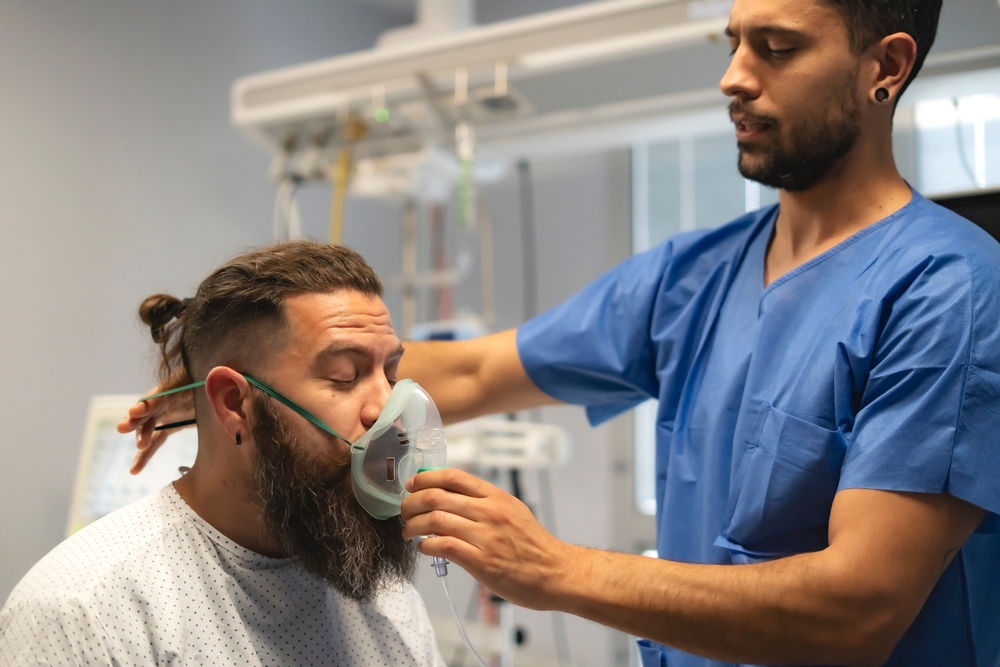
In some industries, the work environment itself is the cause of long-term illness. If your job exposes you to conditions or substances that result in a disease, it may be covered under Nebraska law.
The Specificity Standard: Under Neb. Rev. Stat. § 48-151(3), the cause of disease must be characteristic of and peculiar to the particular trade, occupation, process, or employment in which the employee is engaged. This definition serves to distinguish diseases that are associated with the hazards of a particular employment from those that might just as readily be contracted in any work environment.
Identifiable Illnesses: Examples include mesothelioma caused by asbestos exposure; emphysema caused by 15 years of working in a grain elevator exposed to wheat dust; or contact dermatitis caused by exposure to cleaning agents used by dishwashers.
Ordinary Diseases: The second half of the definition of an occupational disease is “and excludes all ordinary diseases of life to which the general public is exposed.” “Ordinary diseases of life” that might just as readily be contracted in everyday life (like the common cold; flu; or Covid infection) are generally excluded from coverage. If there is competent medical evidence showing conditions at work are meaningfully different from conditions in everyday life, the disease may be occupational: such as a dishwasher regularly using cleaning agents, causing contact dermatitis. However, even evidence showing that a disease was acquired at work is insufficient unless the evidence also shows it was acquired due to causes or conditions that are characteristic of and peculiar to the specific employment: such as evidence that mesothelioma occurs at high rates among asbestos workers and is almost negligible in the population at large.
Last Injurious Exposure Rule: If an employee alleges multiple exposures with multiple employers, potentially spanning years, this rule helps determine liability of the employer and insurer responsible for payment of benefits. If an employee suffered exposure of the type that could cause the disease, the last employer where that exposure occurred is liable.
Date of Disability: This is determined by looking at when the accumulated effects of exposure manifest themselves to the point that the injured worker is no longer able to render further service.
3. Special Rules Concerning Certain Injuries
Cardiovascular Injuries
An employee must prove that both the legal and medical cause of a condition such as heart attack or stroke was their employment. They must prove that they suffered some work-related stress or exertion which is greater than that in the ordinary non-employment life of the employee or any other person. They also have the burden of proof to show through expert medical testimony that the employee’s employment contributed in some material and substantial degree to cause the injury.
Mental Injuries
A physical injury, defined as “violence to the physical structure of the body” which causes mental stress is compensable in Nebraska. If an employee’s mental health issues are found to be the product of a physical work-related injury, they may be compensable. Examples include PTSD following a work-related motor vehicle accident or assault. A mental injury resulting solely from the process of workers’ compensation or litigation is not considered caused by the underlying accident, however.
Mental stress at work which produces a mental or physical injury is not compensable, unless the employee falls within the exception to the rule for “first responders.” In that case, if the first responder such as a sheriff, police officer, state trooper, firefighter, EMT, or paramedic is able to prove that the circumstances causing the mental injury were “extraordinary and unusual” in comparison to normal conditions of their particular employment, and those circumstances caused a mental injury, that mental injury may be compensable.
Why You Need Liberty Law Group

The Nebraska Workers’ Compensation Court is a specialized environment with its own judges and procedural rules. Your employer and their insurance company have an attorney or a team of attorneys advising them. If your benefits have been cut off, your initial claim was denied, or you want to ensure your rights are protected, you need an advocate who understands the complexities of Nebraska workers’ compensation law.
Injured at work? Get a free case evaluation. Call Liberty Law Group today or contact us online.