




A felony DUI charge in Lincoln, Nebraska, carries penalties far beyond those tied to a first or second offense. Prison time, years of license revocation, and a permanent criminal record are all on the table.
Liberty Law Group’s felony DUI lawyers represent clients in Lancaster County who face third-offense DUI charges, DUI with serious bodily injury, and other felony-level cases across Nebraska.
Our Lincoln office at 1201 “O” Street, Suite 101, sits minutes from the Lancaster County Courthouse. We handle felony DUI defense in both state and federal courts throughout Nebraska and Western Iowa.
If a felony DUI arrest has turned your life upside down, our attorneys are ready to review your case during a free consultation. Call our Lincoln office at (531) 249-5534.
Table of Contents
-
- Why Work With a Lincoln Felony DUI Lawyer at Liberty Law Group?
- What Makes a DUI a Felony in Nebraska?
- Penalties for a Felony DUI Conviction in Lincoln
- How Felony DUI Cases Move Through Lancaster County Courts
- Defense Strategies for Felony DUI Charges in Nebraska
- How a High BAC Affects Felony DUI Charges in Nebraska
- DUI Enforcement and Local Context in Lincoln, Nebraska
- FAQs for Lincoln Felony DUI Charges
Why Work With a Lincoln Felony DUI Lawyer at Liberty Law Group?

Felony DUI charges demand a defense team that treats your case with the seriousness it requires. Liberty Law Group brings years of criminal defense experience in Nebraska and Iowa courtrooms, with a focus on high-stakes cases where the consequences are life-altering.
A Firm Built for Serious Criminal Cases
Our attorneys are licensed in both Nebraska and Iowa and handle matters at the state and federal level. We prepare every felony DUI case as though it might go to trial, because thorough preparation often shapes outcomes long before a jury is seated.
Every client works directly with their attorney, not a paralegal or assistant. We review evidence personally, investigate the facts of each stop and arrest, and build a defense strategy tailored to the specific charges. Our firm does not treat clients as case numbers.
Accessible, Transparent Representation
We offer free initial consultations at our Lincoln office and handle criminal defense matters on a flat-fee or structured payment basis, depending on the case. Our team also serves clients from our Omaha headquarters at 13321 California St #300.
Whether your charges originated in Lancaster County, Douglas County, or elsewhere in Nebraska, we are positioned to help.
A felony DUI conviction can carry prison time, long-term license revocation, and a permanent record. Speaking with a Lincoln felony DUI lawyer early can help you understand your options and begin building a defense immediately.
Reach us at (531) 249-5534 to schedule a case review.
What Makes a DUI a Felony in Nebraska?

A felony DUI is a criminal offense that carries enhanced penalties due to prior convictions or serious injury.
A DUI becomes a felony in Nebraska when it involves a third or subsequent offense within the lookback period or when impaired driving causes serious bodily injury. These factors elevate the charge from a misdemeanor to a felony with significantly higher penalties.
Most first and second offenses are classified as misdemeanors. Nebraska law draws a hard line based on two primary triggers.
Third or Subsequent DUI Offense
Under Neb. Rev. Stat. § 60-6,197.03, a third DUI conviction within a 15-year lookback period is a Class IIIA felony. A fourth or subsequent offense is a Class IIA felony.
In plain terms, Nebraska counts how many DUI convictions appear on your record over the past 15 years. If two prior convictions fall within that window and you are arrested again, prosecutors in Lancaster County may file felony charges.
For example, a driver convicted of DUI in 2014 and again in 2019 who is arrested in Lincoln in 2026 faces a third-offense charge, which qualifies as a felony.
DUI That Causes Serious Bodily Injury
A DUI also becomes a felony when the driver causes serious bodily injury to another person. Under Neb. Rev. Stat. § 60-6,198, this offense is a Class IIIA felony, regardless of whether the driver has any prior convictions.
“Serious bodily injury” means an injury that creates a substantial risk of death or causes serious, permanent disfigurement. Even a first-time DUI arrest may result in felony charges if another person is badly hurt.
Contact Liberty Law Group at (531) 249-5534 if you are unsure whether your charge qualifies as a felony.
Penalties for a Felony DUI Conviction in Lincoln

Felony DUI penalties in Nebraska increase significantly based on prior offenses and the severity of the case.
The gap between misdemeanor and felony DUI penalties in Nebraska is steep. A felony conviction brings consequences that follow a person for years, affecting employment, housing, and civil rights.
Third-Offense DUI Penalties (Class IIIA Felony)
A Class IIIA felony in Nebraska carries up to 3 years in prison, 18 months of post-release supervision, and a $10,000 fine. The court must also order a 15-year license revocation under Neb. Rev. Stat. § 60-498.02.
Beyond incarceration and fines, a third-offense conviction triggers mandatory use of an ignition interlock device after any period of revocation. The court may also order substance abuse evaluation and treatment.
Fourth or Subsequent Offense Penalties (Class IIA Felony)
A fourth DUI offense is a Class IIA felony. This carries a potential sentence of up to 20 years in prison. The license revocation period is 15 years, the same as a third offense.
Repeat offenders face increasingly aggressive prosecution. Lancaster County prosecutors often seek prison sentences at the upper end of the statutory range for defendants with extensive records.
Long-Term Consequences Beyond Sentencing
A felony DUI conviction affects more than just the immediate sentence. Several consequences persist well after a person completes their time:
- A felony record may disqualify a person from certain jobs, professional licenses, and housing opportunities
- Firearm ownership is prohibited for convicted felons under both Nebraska and federal law (18 U.S.C. § 922(g))
- Commercial driver’s license holders face permanent disqualification from operating commercial vehicles
- Immigration consequences may arise for non-citizens, including deportation proceedings
These collateral effects make a strong defense all the more critical. A felony DUI charge is not just a traffic matter. It is a serious criminal case.
A felony DUI conviction can affect employment, licensing, and long-term rights.
How Felony DUI Cases Move Through Lancaster County Courts
Felony cases in Lancaster County follow a different path than misdemeanor DUI charges. The process is longer, the hearings are more complex, and the stakes at each stage are higher.
Arrest and Booking
After a felony DUI arrest in Lincoln, the driver is booked at the Lancaster County jail. Law enforcement typically requests a chemical test, either breath or blood. Refusal to test triggers an administrative license revocation under Nebraska’s implied consent law, Neb. Rev. Stat. § 60-6,197.
An attorney may begin working on your case at this stage. Early action can preserve evidence and create opportunities to challenge the case before it progresses. We can also issue timely challenges to the administrative license revocation.
From Arraignment to District Court
Felony DUI cases in Lancaster County start in County Court, where the charges are read and a plea is entered. A preliminary hearing follows, where a judge determines whether probable cause supports the felony charge. If the case is bound over, it moves to Lancaster County District Court.
Pre-Trial Motions and Negotiation
Before trial, defense attorneys may file motions to suppress evidence or challenge the legality of the traffic stop. These motions often shape the direction of the entire case. Plea negotiations also occur during this phase, and a felony charge may sometimes be reduced depending on the facts and the evidence.
Defense Strategies for Felony DUI Charges in Nebraska
Several legal defenses may apply depending on how the arrest and testing were handled. A thorough investigation often reveals weaknesses in the prosecution’s evidence.
A felony DUI charge does not automatically lead to a conviction. Even in serious felony DUI cases, the prosecution must still prove every element beyond a reasonable doubt.
Was the Traffic Stop Lawful?
Law enforcement must have reasonable suspicion to initiate a traffic stop. If the officer lacked a valid reason, any evidence gathered after the stop may be subject to suppression under the Fourth Amendment.
For example, if an officer initiates a stop based on a claimed equipment violation, but the facts do not support a reasonable basis for that belief, the legality of the stop may be challenged. If a suppression motion is granted, certain evidence, including BAC results or field sobriety test observations, may be excluded.
Were Chemical Tests Administered Properly?
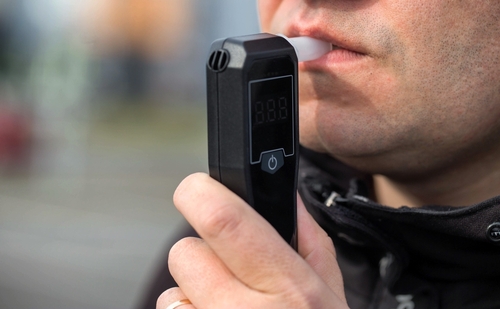
Breath and blood tests must follow strict protocols. Nebraska law requires that breath tests use approved devices, maintained and calibrated according to Nebraska Department of Health and Human Services guidelines. Blood draws must follow proper chain-of-custody procedures.
Common issues that arise in Lincoln DUI cases include the following:
- The breath testing device was not calibrated within the required timeframe
- The officer did not observe the required 15-minute waiting period before administering the test
- Blood samples were improperly stored or handled, raising contamination concerns
- The officer lacked proper certification to administer the breath test
- The testing environment introduced variables that affected accuracy
Each of these issues may form the basis of a motion to suppress or exclude test results.
Are Prior Convictions Valid?
A felony DUI charge based on prior offenses requires that those earlier convictions meet constitutional standards. If a prior conviction was obtained without proper representation, without a valid waiver of counsel, or through a defective plea, it may not count toward felony enhancement.
Our attorneys review every prior conviction in detail. If a prior DUI was constitutionally deficient, the current charge may be reduced from a felony to a misdemeanor.
Challenging Injury Causation in DUI With Injury Cases
When a felony charge rests on serious bodily injury, the prosecution must prove that impaired driving caused the injury. If another driver, road conditions, or a mechanical failure contributed, causation becomes contested. Liberty Law Group handles the accident reconstruction and independent investigation this defense requires.
How a High BAC Affects Felony DUI Charges in Nebraska
A blood alcohol concentration above 0.15 triggers enhanced penalties under Nebraska law. When paired with felony-level charges, a high BAC adds complexity to both sentencing and defense.
Nebraska imposes longer license revocation periods and additional sentencing considerations for drivers with a BAC at or above 0.15. Courts treat a high BAC as an aggravating factor, which may influence the length of a prison term.
Testing Accuracy at Higher BAC Levels
The higher the BAC reading, the more room there is for testing error. Breath testing devices carry known margins of error, and factors like acid reflux, certain medications, and residual mouth alcohol may inflate results. A BAC result is a piece of evidence, not an established fact. Challenging its accuracy is a core part of felony DUI defense.
DUI Enforcement and Local Context in Lincoln, Nebraska
DUI enforcement in Lincoln often concentrates along major corridors such as O Street, Cornhusker Highway, and I-80, especially during weekends, holidays, and University of Nebraska events. Arrest conditions, including lighting, traffic, and field testing environments, may affect how evidence is gathered and later challenged.
Filing Deadlines and Administrative Revocation
Felony DUI charges in Nebraska are generally subject to criminal statutes of limitation, which set deadlines for prosecutors to file charges. In most cases, this period is three years, though specific timelines depend on how the charge is classified and when the alleged offense occurred. Delays in filing may raise due process concerns in certain situations.
For administrative license revocation, the driver has only 10 days after receiving notice to request a hearing. Missing this deadline results in automatic revocation. Contact an attorney immediately after a felony DUI arrest to protect both your criminal and administrative rights.
Missing the 10-day deadline results in automatic license revocation, regardless of the outcome of the criminal case.
FAQs for Lincoln Felony DUI Charges
Is it possible to have a felony DUI reduced to a misdemeanor in Nebraska?
In some cases, yes. If the prosecution’s evidence has weaknesses, such as flawed chemical tests, an unlawful stop, or a questionable prior conviction, there may be room to negotiate a reduction. Each case depends on its specific facts, and a reduction is never automatic.
Does a felony DUI conviction in Nebraska require prison time?
A Class IIIA felony carries up to 3 years in prison, but not every conviction results in incarceration. Judges consider the defendant’s history, the circumstances of the offense, and any mitigating factors. Probation may be available in certain third-offense cases, though it is less common with higher-level felonies.
What happens to my driver’s license after a felony DUI arrest in Lincoln?
Two separate processes affect the license. The criminal case may result in a court-ordered revocation upon conviction. Separately, the administrative process through the Nebraska DMV may revoke the license within 30 days of arrest, regardless of the criminal case outcome. Both must be addressed independently.
Do out-of-state DUI convictions count toward felony enhancement in Nebraska?
Nebraska’s lookback provision considers DUI convictions from other states when determining whether an offense qualifies as a third or subsequent violation. The prior conviction must meet certain legal standards to be counted, which is one reason a thorough review of the record is important.
What if I refused the breath or blood test after my arrest?
Refusing a chemical test triggers an automatic administrative license revocation under Nebraska’s implied consent law. Refusal does not prevent the state from filing criminal charges. In some cases, prosecutors may attempt to introduce evidence of a refusal as part of the overall case, though how that evidence is used depends on the circumstances and applicable legal standards.
When a Felony DUI Charge Feels Like the End of the Road
A felony DUI charge can affect your freedom, your license, and your future. Speaking with a Lincoln felony DUI lawyer as early as possible can help you understand your options and begin building a defense before critical deadlines pass.
Liberty Law Group fights for clients facing the most serious DUI charges in Lancaster County. Our Lincoln attorneys prepare every case with the care and intensity it requires, from the first consultation through resolution.
Call us at (531) 249-5534 for a free consultation.
No one plans for a felony DUI arrest. But once it happens, the next step matters. Contact our Lincoln office to talk through your options with an attorney who handles these cases every day. We take cases on terms designed to make quality defense accessible, because what happens next is too important to face without a strong advocate.