




The first thing we ask anyone arrested for drunk driving in Iowa is not what happened at the stop. It is the date printed on their paperwork, because an Iowa OWI runs on two separate clocks, and the one controlled by the Iowa Department of Transportation starts ticking immediately. A Council Bluffs OWI lawyer at Liberty Law Group can protect both your criminal case and your driver’s license, but only if the license fight starts before its short deadline passes.
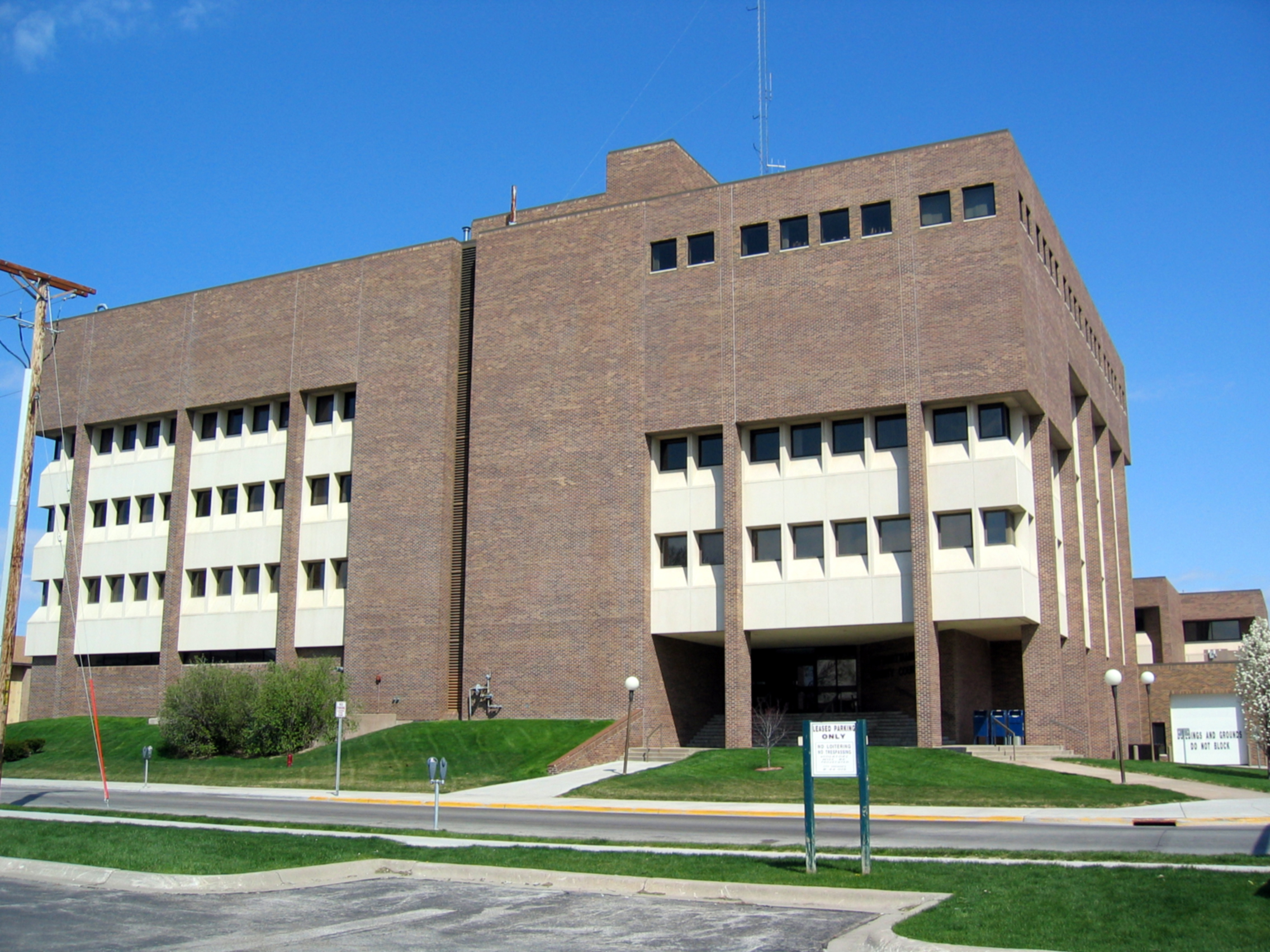
Our attorneys are licensed in both Iowa and Nebraska, and our Omaha office sits just across the river from the Pottawattamie County Courthouse at 227 South Sixth Street in Council Bluffs. Call (402) 865-0501 for a free consultation today, ideally before your first court date.
What Does OWI Mean in Iowa?
OWI stands for operating while intoxicated, the charge Iowa files under Iowa Code section 321J.2 when a driver has a blood alcohol concentration of .08 or more, has any amount of certain controlled substances in their system, or is under the influence of alcohol or drugs. Notice that a drug can support an OWI even without alcohol, and prescription medications can qualify.
Iowa’s implied consent law under Iowa Code section 321J.6 means that by driving in Iowa, you have already agreed to chemical testing when an officer has proper grounds to request it. Refusing the test is your legal right, but it triggers a longer license revocation, generally one year for a first refusal.
Timing rules matter here more than most people realize. Under Iowa Code section 321J.6, if an officer fails to offer the formal test within two hours after the preliminary breath screening test is given or refused, or within two hours after the arrest, whichever comes first, the test generally is not required.
Officers who mishandle the sequence of screening tests, advisories, and formal requests can undermine the case. These procedural details are among the first things we examine.
Iowa OWI Penalties by Offense
Iowa grades OWI charges by prior offenses within a 12-year lookback period, one of the longest in the country. A drunk driving case from a decade ago can still raise the level of a new charge.
Here is the general framework:
- First offense: a serious misdemeanor carrying a minimum of 48 hours in jail, up to one year, and a fine of $1,250, part of which can sometimes be waived or converted to community service
- Second offense: an aggravated misdemeanor, Iowa’s most serious misdemeanor grade, carrying a minimum of seven days in jail, up to two years, and fines from $1,875 to $6,250
- Third or subsequent offense: a class D felony, Iowa’s lowest felony grade but still a felony conviction with lasting effects on firearm rights and employment, carrying 30 days to five years of incarceration and fines from $3,125 to $9,375
Every tier also brings a substance abuse evaluation, a course for drinking drivers, and probation terms that follow you long after any jail time ends. An OWI involving a serious injury or death is charged as a felony regardless of your record, with dramatically higher exposure.
These are ranges, not predictions, and the facts of each case move outcomes inside them. High test results, accidents, and refusals push cases toward the harsh end, while clean records and strong mitigation open doors that the statute alone does not show.
What Happens to Your License After an OWI Arrest?
The Iowa DOT moves to revoke your license through an administrative process that runs separately from criminal court, and you have a short window, generally just 10 days from notice, to demand a hearing and contest it. Miss that window, and the revocation takes effect no matter how strong your criminal defense turns out to be.
Revocation lengths under Iowa Code section 321J.4 and related provisions depend on your history and your test:
- First offense with a failed test: 180 days
- First offense with a refusal: one year
- Second offense: one to two years, depending on test or refusal
- Third offense: a six-year revocation
Iowa softens this with a temporary restricted license, or TRL, that lets many drivers keep driving once an approved ignition interlock device is installed on every vehicle they operate.
For a first offense OWI revocation, the Iowa DOT conditions the TRL on the application, the civil penalty payment, device installation, and an SR-22 filing, which is a certificate your insurer files with the state confirming you carry the required coverage. There is no fixed waiting period to serve first.
Getting back to fully licensed driving involves more than waiting out the clock. Reinstatement generally requires proof of the interlock where ordered, completion of the drinking driver’s course and substance abuse evaluation, a civil penalty payment, and the SR-22 filing kept current with the Iowa DOT.
A Council Bluffs OWI lawyer can sequence these steps so nothing gets missed and your eligibility dates arrive with the paperwork already done.
For Nebraska residents, there is a twist. Iowa cannot revoke a Nebraska license, but it can revoke your privilege to drive in Iowa, and that action is typically reported to Nebraska, which applies its own consequences. Handling both sides of that record at once is routine work for our office.
Can a First Offense OWI Be Kept Off Your Record?
Sometimes, yes, through a deferred judgment. Iowa law under Iowa Code section 907.3 allows certain first offenders to plead guilty, complete probation and treatment requirements, and end the case without a judgment of conviction being entered on their record.
Eligibility for a first offense OWI in Iowa generally requires a test result below .15, no test refusal, no prior deferred judgment on an OWI, and no bodily injury to anyone other than the driver.
Because Iowa’s misdemeanor expungement statute, Iowa Code section 901C.3, specifically excludes convictions under section 321J.2, a deferred judgment is effectively the only path to keeping this charge off your permanent record. Protecting that eligibility is therefore an early strategic priority.
A deferred judgment is not automatic, and judges weigh the facts and your history in deciding whether to grant one. Presenting that request well, with treatment already underway and the record organized, is part of what a prepared defense looks like.
How a Council Bluffs OWI Lawyer Fights These Charges
Every OWI case gets attacked at three points: the stop, the testing, and the procedure. The State has to establish each element through evidence that survives challenge at all three, and we review each one before deciding where a case is strongest.
Defense angles we regularly pursue include:
- Challenging the legal basis for the initial traffic stop
- Attacking field sobriety tests administered on gravel shoulders, in wind, or contrary to standardized protocols
- Contesting breath test results affected by calibration, maintenance, or medical conditions
- Enforcing the two-hour testing window and implied consent advisory requirements
- Suppressing statements taken in violation of your rights
- Negotiating amended charges or deferred judgments where the evidence is strong
No attorney can promise a dismissal, and we will never pretend otherwise. What we promise is that the State will have to earn every element of its case against preparation that assumes trial from day one.
Location shapes these cases, too. Council Bluffs concentrates late-night traffic along the riverfront entertainment district near Harrah’s, Horseshoe, and Ameristar. Stops in that corridor merit close review, because a stop built on brief lane drift or a slow turn may not meet the reasonable suspicion standard Iowa courts apply.
DUI or OWI? What Nebraska Drivers Should Know
The two charges address the same core conduct under different names, and the name follows the state where you were arrested. Nebraska calls it DUI, Iowa calls it OWI, and understanding the difference between a DUI and an OWI matters for anyone in the Omaha metro who regularly crosses the Missouri River.
The label changes more than the letters. Iowa and Nebraska differ on lookback periods, license procedures, interlock rules, and deferred judgment availability, so the state line can meaningfully change what an identical night out costs you. An Omaha resident arrested on the Iowa side needs counsel who knows Iowa procedure and can manage the Nebraska license fallout at the same time.
That is precisely the situation our firm was built for. We handle Iowa OWI defense in Council Bluffs and Nebraska DUI cases from the same office, under one strategy, without referring you across the river.
An OWI Defense Built for a Two-State Metro

The difference between one Council Bluffs OWI lawyer and another comes down to who actually knows this courthouse, this prosecutor’s office, and the Iowa DOT’s administrative machinery. OWI cases here move on two tracks at once, and the administrative track is the one that quietly runs out first.
We handle the criminal case in the Pottawattamie County District Court, part of Iowa’s Fourth Judicial District, and the DOT license hearing alongside it. One incident gets one strategy instead of two disconnected ones.
Our Pottawattamie County OWI defense practice sits inside a full Council Bluffs criminal defense operation, which matters when an OWI arrest arrives packaged with drug, weapon, or driving-while-revoked counts. Our attorneys are admitted in both Iowa and Nebraska and handle state and federal matters, so an arrest on one side of the river does not require a second lawyer on the other.
You will get straight answers about your realistic options, and you will never be judged for the arrest itself. If that is the representation you want, call (402) 865-0501 and put both clocks on your side.
FAQs: Council Bluffs OWI Lawyer
Should I have taken the preliminary breath test at the roadside?
The roadside preliminary test is different from the formal test at the station, and the rules treat them differently. Refusing the preliminary test carries lighter consequences than refusing the formal test, though it can still factor into the officer’s decisions. What you already did is done, and a lawyer can evaluate how it affects your specific case.
Will I lose my job over an OWI charge?
A charge alone is not a conviction, and many people keep working throughout their case. Risk rises for CDL holders, healthcare workers, and anyone whose job involves driving, since employers and licensing boards may have reporting rules. Flag your employment situation early so the defense strategy accounts for it.
Can I drive to work while my license is revoked?
Only with a valid temporary restricted license, and only in compliance with its terms. Driving while revoked is a separate criminal charge that also extends your revocation, so guessing wrong here compounds the original problem. Getting the TRL and interlock set up correctly is worth doing quickly and carefully.
What happens if I am arrested for OWI with a child in the car?
Iowa treats a passenger under 18 as an aggravating factor that can increase penalties, and the arrest can draw attention from child welfare authorities. These cases carry stakes beyond the OWI itself. They warrant immediate, careful handling from counsel familiar with both tracks.
Do OWI checkpoints happen around Council Bluffs?
Iowa’s roadblock statute, Iowa Code section 321K.1, authorizes roadblocks to check licenses, registration, and equipment, and does not list detecting impaired drivers among the permitted purposes. Most local OWI arrests come from ordinary traffic stops and accident responses. If your arrest resembled a checkpoint, tell your lawyer right away.
How long will an OWI stay on my record in Iowa?
Permanently, unless the case ends in a deferred judgment or a dismissal, Iowa does not allow expungement of OWI convictions, which is a major reason the first resolution of the case matters so much. The 12-year lookback also means a conviction can enhance a future charge for over a decade.
What does hiring an OWI lawyer actually cost compared to just pleading guilty?
A conviction carries its own costs: fines, surcharges, interlock fees, higher insurance rates, and career consequences that can run for years. Weighing a fee against those figures is a fair comparison to make before you decide how to resolve the case. We walk through fees openly at the free consultation so you can decide with real numbers.

Two Clocks Are Running. Start the Defense Before Either One Runs Out
The DOT deadline does not wait for your court date, and defenses in these cases are built early, while video evidence is still available and every option remains open. Waiting narrows the options, and options are what a defense is built from.
Liberty Law Group defends OWI charges throughout Council Bluffs and western Iowa from an office minutes across the river. Call (402) 865-0501 or send us a message to schedule your free consultation with a Council Bluffs OWI lawyer today.
Liberty Law Group – Omaha Office
13321 California St, Suite 300,
Omaha, NE 68154
P: (402) 865-0501