





A first-offense DUI lawyer at Liberty Law Group can defend your Omaha DUI, protect your license, and work to keep a conviction off your record. A first offense is a criminal charge, and even without a prior record it can bring license revocation, fines, higher insurance costs, a mandatory alcohol program, and a lasting criminal record.
Whether you can avoid a conviction often depends on acting fast, because the diversion window and the license-revocation deadline both open within days of arrest. We review how the stop, the arrest, and the chemical test were handled, and we move quickly to protect your right to drive and pursue the strongest available outcome.
Table of Contents
- How Nebraska Defines a First Offense DUI
- Penalties for a First Offense DUI in Nebraska
- Douglas County Diversion Program Eligibility
- SR-22 Insurance Requirements After a First DUI
- Impact on Commercial Driver’s Licenses and Professional Licensing
- What Happens After a First DUI Arrest in Omaha: The Process Step by Step
- Why a First Offense Still Deserves a Real Defense
- What an Alcohol Assessment Actually Involves
- How Out-of-State Drivers Are Affected
- Frequently Asked Questions
- Talk to an Omaha DUI First Offense Lawyer Today
How Nebraska Defines a First Offense DUI
Nebraska’s DUI statute, codified at Neb. Rev. Stat. § 60-6,196, prohibits operating a motor vehicle while under the influence of alcohol or drugs, or with a blood alcohol concentration of .08 or higher. For a first offense, no prior qualifying conviction exists within the statutory lookback window, which is what keeps the charge classified at the lowest tier of DUI penalties under Nebraska law.
That classification matters less than people think, though, because Nebraska treats even a first offense seriously compared to many other states. The charge is criminal, not civil, and a conviction creates a permanent record unless later addressed through a set-aside. Treating a first DUI charge casually because it lacks the word “felony” attached to it overlooks how much is actually on the line.
Penalties for a First Offense DUI in Nebraska
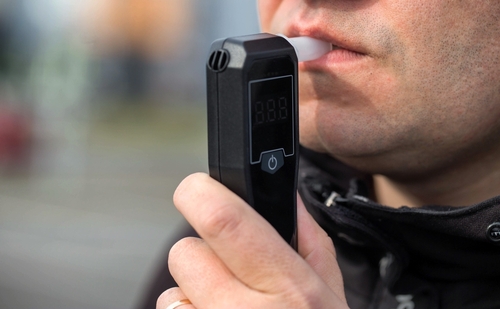
A first-offense DUI in Nebraska is a misdemeanor, but the penalties climb sharply with your blood alcohol concentration at arrest. Under Neb. Rev. Stat. § 60-6,197.03, the same charge can range from a fine and license revocation to mandatory jail time once the BAC crosses .15.
- BAC between .08 and .15. This tier carries the standard first offense classification, with potential jail time up to sixty days, fines, and a license revocation period, though much of the jail exposure can often be addressed through alternatives depending on the specific judge and circumstances.
- BAC of .15 or higher. Nebraska treats elevated BAC levels as an aggravating factor even on a first offense, increasing both the mandatory minimum jail exposure and the length of license revocation compared to the standard tier.
- Refusal to submit to testing. A driver who refuses a breath or blood test after a lawful arrest faces penalties that can exceed those tied to a standard first-offense conviction, along with separate administrative license consequences tied specifically to the refusal itself.
Across every tier, a first-offense conviction also triggers a mandatory ignition interlock requirement in many cases, along with a court-ordered alcohol assessment. Fines vary based on the specific facts and the judge’s assessment, but they accompany every conviction regardless of tier.
Nebraska’s DUI penalties and deadlines change over time and depend on the specifics of your case, so the figures here reflect current law and are not a substitute for advice about your charge. Arrested for a first DUI in Omaha? Call us at (402) 865-0501 for a case review before your deadlines pass.
Douglas County Diversion Program Eligibility

Douglas County offers a diversion program for certain first-offense DUI cases, and qualifying for it can change the entire outcome of a case. Successful completion of diversion generally results in the underlying charge being dismissed rather than resulting in a formal conviction, which preserves a clean record in a way that a standard guilty plea cannot.
Eligibility typically depends on several factors: whether this is truly a first offense with no qualifying prior convictions, whether the BAC level falls within an acceptable range for program admission, and whether any aggravating circumstances, such as an accident causing injury, are present in the case.
The program usually requires completion of an alcohol education or treatment component, periodic check-ins, and a defined period of compliance before the case is formally dismissed.
Not every first-offense case qualifies, and prosecutors retain discretion over which cases get admitted into diversion even when a defendant technically meets the baseline criteria. An attorney who regularly handles DUI cases in Douglas County understands what makes an application for diversion more likely to succeed, including how the application is presented and what supporting documentation strengthens it.
Missing the application window, which often opens early in the case, can foreclose this option entirely, which is one of the strongest reasons to involve an attorney immediately after a first-offense arrest rather than waiting to see how the case unfolds.
Diversion can keep this off your record, but the window is short. Call (402) 865-0501 to see if you qualify.
SR-22 Insurance Requirements After a First DUI
Under Neb. Rev. Stat. § 60-4,186, a first-offense DUI conviction generally requires you to file an SR-22 certificate as proof of financial responsibility before your driving privileges can be reinstated after the revocation period ends. An SR-22 is not actually a type of insurance policy. It’s a certificate that an insurance company files with the state confirming that a driver carries the state’s minimum required liability coverage.
The practical effect is that insurance premiums increase substantially, often for a period of three years or more, since insurers classify SR-22 drivers as high risk. Some insurance carriers decline to write policies for SR-22 drivers altogether, which narrows the available options to carriers that specifically handle higher-risk policies.
Letting an SR-22 filing lapse, even briefly, can result in an automatic license suspension separate from the original DUI case, which makes consistent compliance important well after the criminal case itself has closed.
Impact on Commercial Driver’s Licenses and Professional Licensing
A first-offense DUI carries consequences for CDL holders that go beyond what a standard license faces. Federal regulations require a one-year disqualification from operating a commercial vehicle following a first DUI conviction, regardless of whether the offense occurred in a personal vehicle or a commercial one.
For someone whose livelihood depends on a CDL, that disqualification period functions as a serious economic penalty layered on top of the criminal case itself.
Professional licensing boards in fields such as healthcare, education, and other regulated industries may also require disclosure of a DUI arrest or conviction, depending on the specific licensing rules that govern that profession.
Some boards open an independent review process triggered by the criminal charge, running on a separate timeline from the court case. Coordinating the criminal defense with any licensing disclosure obligations early in the process helps avoid surprises that could affect employment well before the criminal case resolves.
What Happens After a First DUI Arrest in Omaha: The Process Step by Step

The arrest and initial booking. Following a DUI arrest in Omaha, processing typically includes booking and, depending on the circumstances, either release on a citation or a brief hold before bond is addressed.
The administrative license revocation clock starts immediately. Separate from the criminal case, the arrest triggers an administrative license revocation process through the Nebraska Department of Motor Vehicles. A short window exists to request a hearing challenging that revocation, and missing it forfeits the right to contest it administratively.
Arraignment in Douglas County Court. This is also typically the point where diversion eligibility starts getting evaluated, if it hasn’t been raised already.
Discovery and case evaluation. The defense reviews the arrest report, any video evidence, field sobriety test documentation, and chemical test records. This stage often reveals whether procedural issues exist that could affect the strength of the state’s case.
Pretrial motions, where applicable. If grounds exist to challenge the stop, the arrest, or the chemical test administration, motions get filed before the case proceeds further. A successful motion can change the entire trajectory of the case.
Resolution through diversion, plea negotiation, or trial. Many first-offense cases resolve through diversion when eligible, or through negotiated terms that minimize long-term consequences.
Sentencing or program completion. If resolved through diversion, successful completion ends in dismissal rather than a sentencing hearing.
Navigating the Nebraska ALR Process
When you are arrested for a DUI in Omaha, you actually face two separate cases: the criminal charge in Douglas County Court and the Administrative License Revocation (ALR) through the Nebraska DMV. The moment you are arrested, the officer will likely confiscate your physical driver’s license and issue a 15-day temporary driving permit.
You have 10 days from the date the revocation notice is served, usually at your arrest, to petition for an ALR hearing to contest the automatic suspension. Failing to request this hearing within the deadline means you forfeit your right to fight the administrative suspension entirely.
The 10-day license deadline moves fast. Call (402) 865-0501 today to protect your right to drive.
Why a First Offense Still Deserves a Real Defense
Treating a first DUI as a foregone conclusion overlooks how often real issues exist in the underlying stop, arrest, or testing procedure. Field sobriety tests are frequently administered incorrectly, in poor lighting, on uneven ground, or by officers without current certification.
Breath testing machines require calibration records that don’t always hold up to scrutiny. The basis for the initial stop itself sometimes fails to meet the legal standard required to justify it in the first place.
A first offense DUI lawyer who reviews these details thoroughly, rather than assuming a quick plea is the only path forward, sometimes finds the basis for a dismissal, a reduced charge, or admission into diversion that a defendant would have missed by handling the matter alone or accepting the first offer presented.
What an Alcohol Assessment Actually Involves
Nebraska courts typically order an alcohol assessment as part of resolving a first-offense DUI, whether through diversion or a standard plea. This assessment is conducted by a licensed evaluator and looks at drinking patterns, frequency, and any indicators of dependency, then results in a recommendation ranging from a brief education class to a more extended treatment program.
The outcome of this assessment carries real weight. A defendant who completes the assessment promptly and follows through on whatever level of treatment is recommended often presents a stronger case for favorable terms than someone who delays or treats the requirement as a box to check.
Judges and prosecutors in Douglas County generally view early, voluntary compliance as a meaningful signal, separate from whatever the underlying facts of the arrest itself show.
It’s worth noting that the assessment recommendation isn’t always proportional to the BAC level recorded at arrest. Some first-offense defendants with relatively low BAC readings still receive a more involved treatment recommendation based on other factors the evaluator considers, while others with higher readings receive a more limited recommendation.
How Out-of-State Drivers Are Affected
Out-of-state drivers face consequences in two states at once. A first-offense Omaha DUI is reported to your home state through interstate compact agreements, and that state then applies its own license penalties on top of Nebraska’s.
This creates a layered situation. A Nebraska court resolves the criminal case and any Nebraska-specific license revocation, but the driver’s home state separately determines what happens to their actual license once notified of the conviction. An attorney handling a first-offense case for an out-of-state driver needs to account for both sets of consequences, not just the Nebraska side of the matter, when advising on how to resolve the case.
Frequently Asked Questions
Can I lose my job over a first-offense DUI in Nebraska?
It depends on your employer’s policies and whether your job requires driving or a clean record as a condition of employment. Jobs requiring a CDL face the most direct risk due to the federal one-year disqualification rule, while other employment situations depend on individual company policy.
How soon after my arrest do I need to act on the license revocation?
You must request the administrative hearing within 10 days of the revocation notice, which is usually served at your arrest, and your temporary permit lasts only 15 days. Miss that window and you lose the right to contest the suspension, so call us immediately after a DUI arrest.
Will diversion show up on a background check after dismissal?
After you complete diversion, the charge is dismissed and generally does not appear as a conviction. The arrest itself can still show up in some background databases, and we can advise you on whether a later record-clearing step is available in your situation.
Is jail time mandatory for a first DUI in Nebraska?
Not always. For a standard first offense with a BAC under .15, jail time can often be avoided through probation or diversion. But a BAC of .15 or higher, or a test refusal, carries mandatory minimum jail exposure, and the exact terms depend on the facts and the judge.
Can I still get diversion if I refused the breath test?
Possibly, but it is harder. Douglas County prosecutors often treat a refusal as an aggravating factor when deciding who gets into diversion. We can present the circumstances of the stop and the refusal in a way that supports your application, though admission is never automatic.

Talk to an Omaha DUI First Offense Lawyer Today
A first DUI arrest in Omaha sets a short clock running on decisions that affect your license, your insurance, and potentially your career. Call our Omaha office at (402) 865-0501 or our Lincoln office at (531) 249-5534 for a review of your first-offense DUI. Our Omaha office is at 13321 California St #300, Omaha, NE 68154. Call today, before the 10-day license deadline and the diversion window close.