




Here is what changes between a first and second DUI in Nebraska: the prosecution already has a conviction on record, and they use it from the first hearing forward. The prior offense determines the charge tier, it drives the mandatory minimum sentence, and it removes the sentencing flexibility that first-time defendants sometimes receive.
Lancaster County prosecutors approach second offense DUI cases differently than first offenses because the statute requires them to. The prior conviction is not background information. It is the prosecution's primary tool, and the defense against a second offense DUI Lincoln charge starts with understanding exactly how that tool works and where it can be challenged.
If you are facing a 2nd DUI Lincoln charge, contact Liberty Law Group immediately at (531) 249-5534. Consultations are free and available 24 hours a day, seven days a week.
How Nebraska Determines Whether a Conviction Counts as a Second Offense
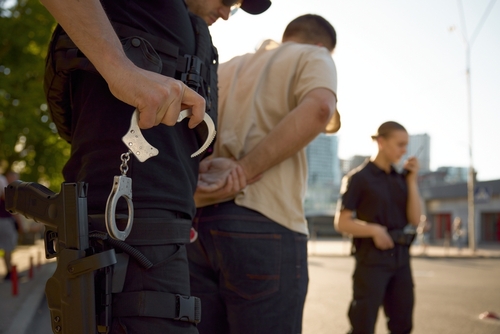
Under Nebraska Revised Statute §60-6,197.02, a prior conviction triggers second-offense sentencing when it occurred within 15 years of the current offense date. The calculation runs from the date of the prior offense to the date of the current offense, not from conviction dates or sentence completion dates.
Two aspects of this lookback create results that defendants do not anticipate. First, the 15-year window applies to convictions from any jurisdiction. A DUI conviction from Colorado, Iowa, Kansas, or any other state counts as a prior offense in Nebraska if it would have qualified as a DUI violation under Nebraska law at the time it was entered.
The Lancaster County prosecutor's office requests driving records from every state where the defendant has lived during the lookback period, and those out-of-state convictions carry the same weight as Nebraska convictions.
Second, the qualifying offenses extend beyond standard DUI. Prior convictions for test refusal, DUI causing serious bodily injury, DUI-related motor vehicle homicide, and DUI-related motor vehicle homicide of an unborn child all count as prior offenses under the lookback statute. A defendant who was charged with test refusal five years ago and considers that a lesser matter will find it treated as a prior offense for second-offense sentencing purposes.
As the second offense DUI lawyer Lincoln clients turn to, we often begin by challenging the validity of the prior conviction itself. If the prior conviction resulted from a constitutionally defective proceeding, if the defendant lacked counsel at that proceeding, or if the out-of-state conviction does not map cleanly to a Nebraska DUI offense, those arguments belong at the front of the defense, before any discussion of the current charge.
Call Liberty Law Group at (531) 249-5534 to review both the current charge and the prior conviction record before your first Lancaster County court appearance.
What a Second Offense DUI Conviction Actually Requires in Lincoln
Lancaster County Court handles second offense DUI misdemeanors. Lancaster County District Court handles any felony escalation. The charge tier depends on two variables: BAC level and whether the defendant refused chemical testing.
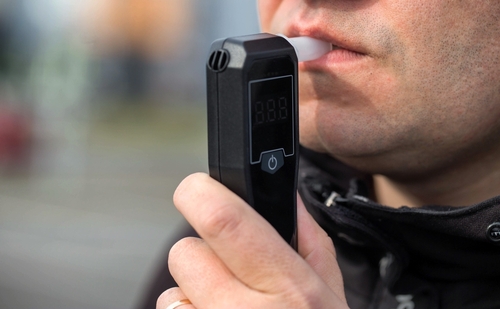
At a BAC between 0.08 and 0.149, a second offense is a Class W misdemeanor under Neb. Rev. Stat. §60-6,197.03. The penalties include up to six months in jail, a $500 fine, and an 18-month license revocation. Without probation, the absolute mandatory minimum is 30 days in jail. The 10 days or 240 hours of community service are only an alternative condition if probation is granted.
At a BAC of 0.15 or above, or following a test refusal, the offense escalates to a Class I misdemeanor. The penalties rise to up to one year in jail, a $1,000 fine, and a license revocation ranging from 18 months to 15 years. Without probation, the absolute mandatory minimum is 90 days to 1 year in jail. The 30-day jail term is the mandatory minimum condition if probation is granted.
In both tiers, the court cannot waive the monitoring requirement, the 45-day no-driving period at the start of the revocation, or the subsequent ignition interlock device requirement. Those penalties are statutory and not subject to judicial discretion. They apply whether the case resolves through trial or guilty plea.
For anyone facing a second offense DUI in Lincoln, Nebraska, this is the core reality: certain consequences are locked in upon conviction, regardless of how sympathetic the judge is or how cooperative the defendant has been. The only way to avoid them is to avoid conviction.
Mandatory Continuous Alcohol Monitoring: What It Means in Practice
Continuous alcohol monitoring is the consequence that most dramatically changes daily life after a second DUI conviction, and it is widely misunderstood until it is imposed.
While statutory multi-year monitoring is strictly required for third offenses, Lancaster County judges frequently impose continuous alcohol monitoring as a condition of pre-trial release, bond, or probation for second offenses.
This means you may be forced to wear a transdermal device for months while your case and probation wind through the courts. For a Class I misdemeanor, it can extend to 15 years, depending on the revocation length ordered by the court.
A Lancaster County 2nd DUI attorney who explains the full scope of this requirement before any plea is entered gives the client the information needed to make a genuinely informed decision about how to proceed.
How the Defense Approaches a Second Offense DUI in Lancaster County
The defense analysis on a second DUI in Lincoln runs on two tracks simultaneously, just as it does on a first offense. The ALR hearing request must go to the Nebraska DMV within 10 days of arrest. That deadline does not pause while the criminal defense is being organized, and missing it means the license revokes automatically and cannot be recovered through the criminal case outcome.
On the criminal track, the defense review covers the same foundational issues present in any DUI case, with additional layers specific to repeat-offense prosecution.
The traffic stop remains the first point of analysis. If the stop lacked reasonable articulable suspicion, a motion to suppress invalidates the entire evidence chain, including any evidence the prosecution planned to use to establish the second-offense designation.
Specifically, in Lancaster County, officers patrolling near the Haymarket district, the Antelope Valley corridor, and high-density residential areas around UNL generate a significant share of DUI arrests. Stop documentation in those areas warrants careful review.
The DataMaster DMT breath test requires the same scrutiny it receives in any DUI defense: calibration records, operator certification, and testing protocol compliance. On a second offense, however, the breath test result carries greater weight because the prosecutor uses it not just to prove impairment but to establish the BAC tier that determines whether the charge is a Class W or Class I misdemeanor.
A successful challenge to the BAC reading can drop the charge tier and change the mandatory minimum entirely.
The prior conviction itself is challengeable under certain circumstances. If the prior DUI conviction was obtained without the defendant being represented by counsel and without a knowing and voluntary waiver of that right, using it to enhance sentencing violates the Sixth Amendment under the principle established in Burgett v. Texas. We pursue a review of the original conviction record as a standard part of second-offense defense preparation.
The Insurance and Employment Reality After a Second DUI in Lincoln
A second DUI conviction in Lancaster County creates a 15-year lookback that can affect insurance, employment, and licensing. Nebraska insurers classify a second DUI as high-risk and typically require SR-22 filing for three to five years after reinstatement. SR-22 is a certificate of financial responsibility, not insurance, and signals a serious violation history to future carriers.
Certain jobs, especially those regulated under federal transportation rules, may be impacted under 49 CFR Part 383, including CDL disqualification for one year on a first applicable offense. Licensed professionals must also disclose convictions to their boards, which may initiate separate disciplinary action.
The Lancaster County record is accessible through standard background checks, and licensing timelines often differ from the criminal process. Defense strategy typically considers these collateral consequences alongside the court case.
When Does a Second Offense Risk Becoming a Third?
Defendants currently facing a second DUI in Lincoln are, by definition, one more conviction away from third-offense territory. A third offense at a BAC of 0.15 or above reaches Class IIIA felony status under Nebraska Revised Statutes, carrying up to three years in prison, fines between $1,000 and $10,000, a five-to-fifteen-year license revocation, vehicle immobilization, and mandatory alcohol monitoring.
Nebraska's DUI Court program, which provides a structured alternative to incarceration for third and fourth-offense defendants, is not available at the second-offense stage. The time to address the trajectory is now, before a third offense converts the case into felony territory where the options narrow dramatically.
Defendants who successfully defend the second offense, whether through suppression, charge reduction, or full dismissal, protect that third-offense threshold. Every second-offense conviction that is avoided is a third-offense felony that cannot happen.
Frequently Asked Questions: Second Offense DUI in Lincoln, Nebraska
Does a DUI from another state count toward the second-offense designation in Nebraska?
Yes. Nebraska counts qualifying out-of-state DUI convictions as prior offenses within its 15-year lookback period. Prosecutors routinely review driving records from states where the defendant has lived to identify prior convictions. A DUI conviction from another state, such as Iowa, Kansas, or Missouri, can be treated the same as a Nebraska conviction when determining whether a charge qualifies as a second offense.
Can I get probation instead of jail time on a second DUI in Lancaster County?
Yes. Probation may be available instead of jail for a second DUI offense in Nebraska, but mandatory penalties still apply. The 45-day no-driving period, ignition interlock requirement, continuous alcohol monitoring, and license revocation remain in effect. Probation only replaces the incarceration portion of the sentence and requires strict compliance with all court-ordered conditions throughout the supervision period.
What happens if I violate the continuous alcohol monitoring requirement?
A confirmed alcohol-monitoring violation, such as a positive reading or a tampered device, triggers a court review hearing. Possible consequences include an extended monitoring period, activation of suspended jail time, or additional probation conditions. The court weighs the violation's severity and your prior compliance. A single violation does not automatically mean jail, but it requires a formal legal response.
Can the prior DUI conviction be challenged in the second-offense case?
In some cases, yes. If a prior DUI conviction was entered without counsel and without a valid waiver of that right, it may be excluded from sentence enhancement. Defense attorneys review court records, plea transcripts, and related documents to determine whether constitutional requirements were satisfied. While not every prior conviction can be challenged successfully, this remains an important aspect of second-offense DUI defense.
How does a second DUI conviction affect my insurance in Nebraska?
A second DUI conviction requires SR-22 filing with the Nebraska DMV, marking you as a high-risk driver. Most insurers significantly increase premiums, often by 50% to more than 100%, and may keep that classification for three to five years after reinstatement. The SR-22 requirement continues during the revocation period, making uninterrupted insurance coverage an important legal and financial obligation.
Speak with a Second Offense DUI Attorney in Lincoln at Liberty Law Group

The 10-day ALR hearing deadline runs from the date of your arrest. The defense review of the prior conviction record, the current stop documentation, and the breath test calibration history needs to begin before the first Lancaster County court appearance locks anything in.
Liberty Law Group represents clients facing second offense DUI charges throughout Lincoln and Lancaster County, as well as Saline, Otoe, Saunders, Butler, and Gage counties across the surrounding region. The firm handles second and subsequent DUI matters through both Lancaster County Court and Lancaster County District Court and appears in those courts regularly.
Call us at (531) 249-5534. The office is located at 1201 "O" Street, Suite 101, Lincoln, NE 68508. Request your free and confidential case review today.
Liberty Law Group - Lincoln Office
1201 O St #101,
Lincoln, NE 68508
P: (402) 645-0031