




A third DUI charge in Lincoln is treated as a much more serious offense under Nebraska law. Depending on the BAC level or whether a test was refused, a third offense DUI Lincoln charge can be classified as a Class IIIA felony. This changes the court process, the prosecutors involved, and the possible penalties.
Misdemeanor DUI cases are handled in Lancaster County Court. A felony DUI moves to District Court, where the stakes are higher and prison is possible instead of jail. If you face a 3rd DUI Lincoln Nebraska charge, contact Liberty Law Group immediately for help and guidance.
When a Third DUI Becomes a Felony in Nebraska

Under Nebraska Revised Statute §60-6,197.03, third offense DUI penalties depend on BAC level and whether the person refused testing.
At a BAC between 0.08 and 0.149 with two prior convictions, the charge is a Class W misdemeanor. Penalties include up to one year in jail, a $1,000 fine, and a 15-year license revocation. If probation is granted, a mandatory minimum of 30 days in jail still applies, along with alcohol monitoring.
At a BAC of 0.15 or higher, or a chemical test refusal, the charge becomes a Class IIIA felony. Penalties include up to three years in prison, fines from $1,000 to $10,000, and a 15-year revocation. Probation requires at least 60 days in jail, plus supervision, monitoring, and abstinence requirements.
A third offense DUI Lincoln, Nebraska, case carries long-term consequences beyond jail or prison, affecting jobs, housing, licensing, and firearm rights. Call Liberty Law Group at (531) 249-5534 to speak with a felony DUI Lincoln 3rd offense attorney before your preliminary hearing date.
How a Felony DUI Moves Through Lancaster County District Court
Most third-offense defendants do not understand how the felony process works until they arrive at the first court appearance, and by then key opportunities have already passed.
A felony DUI case in Lincoln begins at Lancaster County Court for the preliminary hearing. The purpose of the preliminary hearing is to determine whether probable cause exists to bind the case over to Lancaster County District Court.
The standard at this stage is lower than the trial standard, but the preliminary hearing is not a formality. It is the first meaningful opportunity to challenge the stop, the chemical test, and the evidence chain in a formal adversarial proceeding.
If the case is bound over, the Lancaster County Attorney's office files an Information in District Court, and the case restarts with a District Court arraignment. The defendant enters a plea, and the pretrial motion schedule begins. Motions to suppress, motions to dismiss, and evidentiary challenges are filed and argued in District Court before any plea resolution or trial date is set.
The Lancaster County District Court handles felony criminal matters, including violent crimes, serious drug offenses, and financial crimes, alongside felony DUI cases. The prosecutor assigned to a felony DUI in that court handles a different caliber of case than a misdemeanor DUI prosecutor in county court, and the defense preparation must match that level.
Specifically, the defense record built at the preliminary hearing stage carries forward into District Court proceedings. Testimony from the arresting officer at the preliminary hearing can be used at trial. Cross-examination at that stage is not simply about winning a probable cause argument. It is about building a record that shapes every subsequent proceeding.
As your Lancaster County 3rd DUI attorneys, we appear in both Lancaster County Court and Lancaster County District Court and build the defense record with both stages in mind from the first day of representation.
The No-Tolerance Statute: What a Felony DUI Conviction Means Permanently
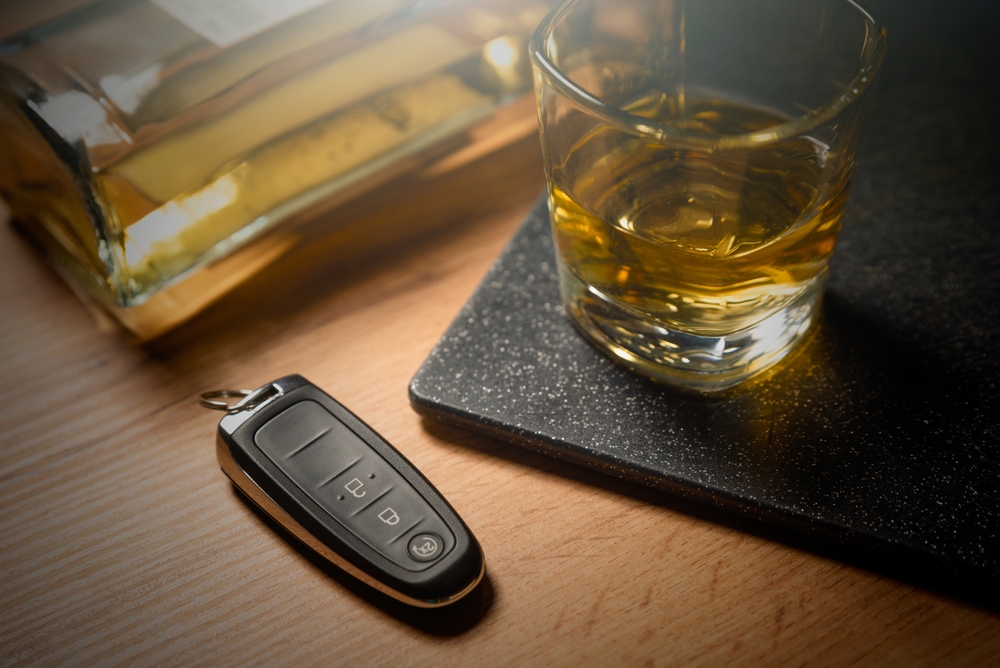
A third offense felony DUI conviction triggers a permanent change in legal status under Neb. Rev. Stat. §60-6,196.01 that follows a driver for life. After a felony DUI conviction in Nebraska, the threshold for a subsequent DUI charge drops permanently from 0.08% BAC to 0.02% BAC.
Any driver with a prior felony DUI conviction who operates or has actual physical control of a vehicle with a BAC of 0.02% or above commits a Class IIIA misdemeanor under this statute, regardless of observed impairment and regardless of how many years have passed since the felony conviction.
A BAC of 0.02% is approximately equivalent to one standard drink for an average adult. This threshold is not a practical drinking limit. It is effectively a lifetime prohibition on driving after consuming any alcohol at all. The statute has no sunset period. It applies permanently from the date of the felony conviction forward.
This is the consequence that most changes a person's day-to-day life beyond the immediate sentence, and it is the reason avoiding the felony conviction itself, not just minimizing the sentence, is the primary objective of the defense.
Vehicle Immobilization in Third Offense Cases
Under Neb. Rev. Stat. §60-6,197.03, the court has authority to order the immobilization of all motor vehicles owned by the convicted defendant for a period ranging from five days to eight months. The court can suspend or revoke the registration and license plates of those vehicles during the immobilization period.
Two exceptions apply. A vehicle subject to a lienholder with a lien executed before the immobilization order can be released to that lienholder.
A vehicle registered to a co-owner who is not the convicted defendant can be released upon that co-owner filing an affidavit with the court stating the vehicle is necessary for their employment or the well-being of their dependents, and confirming they will not allow the convicted defendant to operate it.
The immobilization order applies to vehicles owned by the defendant, not only the vehicle involved in the arrest. A defendant who owns multiple vehicles faces immobilization of each one.
The practical consequence for a defendant who relies on a work vehicle, particularly in a city like Lincoln where public transportation coverage is limited outside the core downtown corridor, is immediate and significant. Challenging the conviction before it is entered is the only way to prevent the immobilization order from issuing.
Nebraska DUI Court: The Alternative to Prison for Third Offense Defendants
Nebraska's DUI Court program is specifically designed for third and fourth-offense defendants. It is not available at the first or second offense level. For defendants facing a felony DUI, Lincoln, 3rd offense charge who meet the eligibility criteria, it represents the most significant alternative to incarceration available under Nebraska law.
Eligibility requires a comprehensive assessment of substance abuse severity and the risk of reoffending conducted before admission. A history of violent crime can disqualify a defendant.
The program spans 18 to 24 months and includes residential or outpatient substance abuse treatment depending on the assessment results, regular DUI Court hearings before the assigned judge, random drug and alcohol testing, probation supervision with frequent reporting requirements, and structured educational programming on impaired driving risk.
Successful completion produces tangible legal benefits. The court may reduce the severity of the DUI charges, shorten the probation period, or lower fines. Every benefit is conditioned on continuous compliance throughout the program. A single positive drug or alcohol test, a missed court appearance, or a probation violation can result in removal from the program and return to standard sentencing.
The DUI Court option requires proactive pursuit. Defendants who wait for the court to suggest the program lose time that matters for the assessment process. The third offense DUI lawyer Lincoln clients retain at our firm raises DUI Court eligibility at the outset of the case, not as an afterthought after other options are exhausted.
What the Defense Looks Like at the Felony Level

The defense approach to a felony third offense DUI in Lancaster County follows the same core DUI analysis, but with higher stakes and additional layers of review.
The first step examines prior convictions. Under Burgett v. Texas, prior DUI convictions entered without counsel or a valid waiver cannot be used for enhancement. At the third offense level, both prior convictions must be valid. If either is successfully challenged, the case drops out of the third offense category, removing the felony designation and its penalties.
The second step focuses on the current arrest. This includes the traffic stop, field sobriety tests, DataMaster DMT calibration records, officer certification, and testing procedures. Each part is closely reviewed for compliance with legal and scientific standards. A successful suppression motion at the Lancaster County Court preliminary hearing can prevent the case from moving forward to District Court.
The third step addresses the BAC level. A reading below 0.15 keeps the charge at a misdemeanor level instead of a felony. Challenging breath test accuracy or reliability can reduce or exclude the BAC result. This can change the entire case outcome.
At this level, small legal and technical issues can make a major difference in penalties, license loss, and long-term consequences.
Frequently Asked Questions: Third Offense DUI in Lincoln, Nebraska
Does a third DUI in Lincoln automatically result in a felony charge?
Not automatically. The felony designation applies when the BAC is 0.15 or above, or when the defendant refused chemical testing. A third offense with a BAC between 0.08 and 0.149 remains a Class W misdemeanor, though still carrying up to one year in jail and a mandatory 15-year license revocation. Determining which tier applies is the first step in understanding the charge and building the defense.
What court handles a felony third DUI in Lincoln?
A felony DUI case begins at Lancaster County Court for the preliminary hearing. If probable cause is found and the case is bound over, the Lancaster County Attorney's office files an Information in Lancaster County District Court, where the case proceeds through arraignment, pretrial motions, and either plea resolution or trial. This is a different court with different procedural requirements than the county court that handles misdemeanor DUI cases.
What does the 0.02 BAC rule mean after a felony DUI conviction?
Under Neb. Rev. Stat. §60-6,196.01, a driver with a prior felony DUI conviction commits a new offense if they drive with a BAC of 0.02% or higher. This rule applies for life and does not expire. It is roughly equal to one standard drink and creates a near-total ban on driving after any alcohol use. The restriction begins after conviction and cannot be changed by the court.
How does a third DUI felony conviction affect housing and employment in Lancaster County?
A Class IIIA felony conviction shows up on background checks used by employers, landlords, and licensing boards. Many Nebraska employers in healthcare, education, transportation, and government jobs may disqualify applicants with felony records.
Landlords in Lincoln often screen for felonies and may deny housing. Professional boards for nursing, law, and real estate require disclosure and may take disciplinary action separate from the criminal case.
Speak with a Third Offense DUI Attorney in Lincoln at Liberty Law Group

A third offense DUI charge at the felony tier involves Lancaster County District Court, a potential prison sentence, a permanent 0.02 BAC threshold, and consequences that reach every area of daily life for years after the case closes. The defense preparation that matters most happens before the preliminary hearing, not after.
Liberty Law Group represents clients facing third offense DUI charges throughout Lincoln and Lancaster County, as well as Saline, Otoe, Saunders, Butler, and Gage counties across the surrounding region. The firm handles felony DUI matters through Lancaster County District Court and appears in both county and district court regularly.
Call our Lincoln office directly at (531) 249-5534 or toll-free at (877) 425-4237. Find our office at 1201 "O" Street, Suite 101, Lincoln, NE 68508. Request your free and confidential case review today.
Liberty Law Group - Lincoln Office
1201 O St #101,
Lincoln, NE 68508
P: (402) 645-0031